Libyan Parliament Clears Turkey Maritime Accord
The unanimous vote establishes a direct energy corridor linking Turkish and Libyan coasts, setting off immediate legal and territorial objections.
By Megan Greco ·

A unanimous vote in Libya's parliament on Tuesday has greenlit a maritime agreement with Ankara, establishing a direct economic link between the Turkish and Libyan coastlines. The passage of this memorandum has drawn immediate condemnation from Athens, which views the arrangement as a threat to its sovereign rights in the region.
The deal outlines a corridor connecting southern Turkey with northern Libya. Proponents argue that this route provides essential access to significant subsea assets, with estimates suggesting that natural gas reserves valued at several hundred billion US dollars could be located beneath the seabed in this area. Both Ankara and Tripoli intend to jointly secure and exploit these resources.
Greece has voiced firm opposition, asserting that the designated corridor disregards the maritime zones around its islands, specifically Crete, Karpathos, and Rhodes. Athens maintains that it holds exclusive economic rights surrounding these territories. According to the Greek Foreign Ministry, the European Union has backed this stance, labeling the agreement null and void due to its infringement upon the rights of third parties. EU High Representative Kaja Kallas echoed this sentiment, noting that the accord infringes upon the sovereign rights of third states.
The disagreement rests on competing legal interpretations. Greece anchors its claims in the UN Convention on the Law of the Sea, specifically Article 121, which grants inhabited islands capable of supporting an independent economic life the same rights to an exclusive economic zone as mainland territory. Athens points to a 2022 International Court of Justice ruling concerning Colombia and Nicaragua to argue that boundary demarcation must fairly weigh coastlines and geography.
Turkey counters that the specific geography of the Mediterranean demands a different approach. Turkish officials argue that granting full economic zone rights to small islands located near their coasts would effectively cut off Ankara from open waters. Turkey is not a signatory to the UN convention and rejects arbitration by UN tribunals, while legal experts remain divided on what a fair division would entail.
The political landscape in Libya has evolved since 2019, when the deal was first drafted between Turkey and the western-based government. Turkish firms have secured billions in reconstruction contracts, and state energy firm TPAO is collaborating with Libya's National Oil Corporation on seismic surveys. Additionally, Turkey provides weapons and training to forces in eastern Libya.
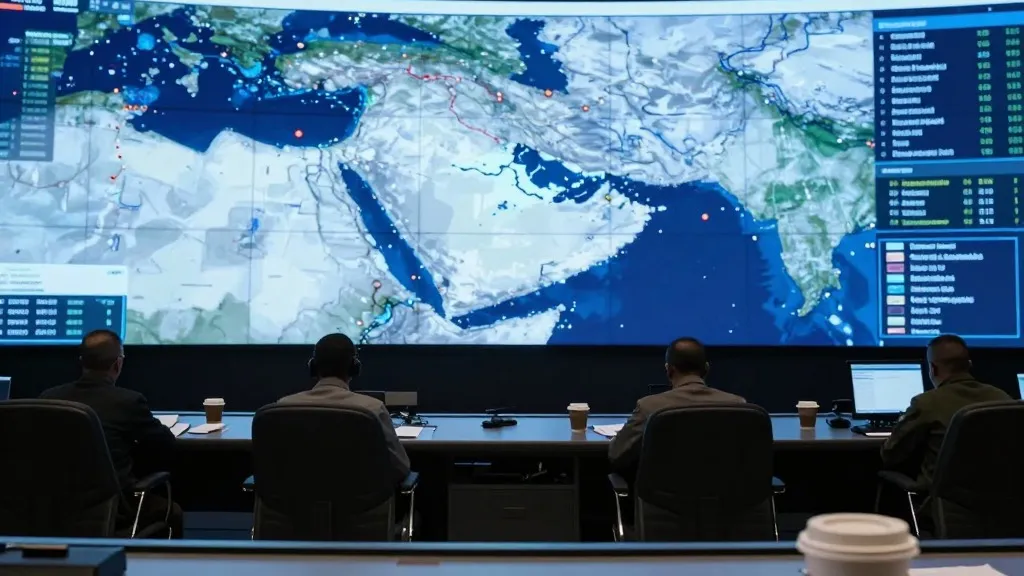
This agreement creates a conflict with the planned EastMed pipeline, which seeks to transport gas from Israel and Cyprus through Greece to improve EU energy security, as the corridor intersects its path. Ankara maintains that projects operating on its claimed continental shelf require its consent. The region appears to be dividing into two competing blocs: one led by Turkey and Libya, and another comprising Greece, Cyprus, Egypt, and Israel.
The legal and territorial dispute over maritime zones in the eastern Mediterranean continues to develop.
Source: Deutsche Welle