Voters Decide Fate of Netanyahu in Divided Israeli Election
A close race pits long-time Prime Minister Benjamin Netanyahu against a broad opposition coalition seeking to end his three decades of dominance.
By Chloe Zhao ·
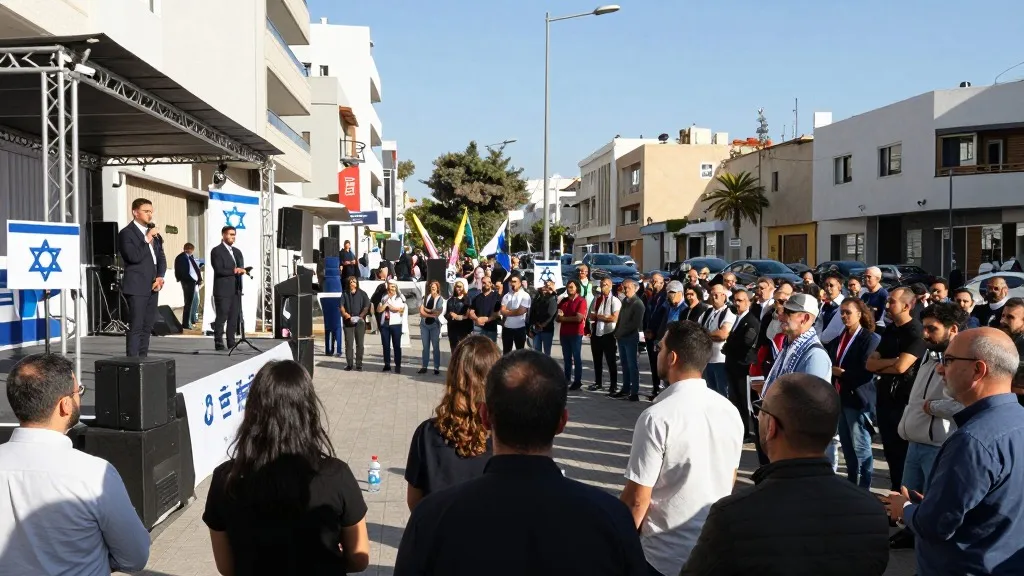
Israelis cast their ballots on Tuesday in a general election that has become a decisive referendum on the leadership of Prime Minister Benjamin Netanyahu. The contest is defined less by traditional left-right ideological divides and more by a sharp split between those who support the incumbent and those who seek to replace him. Polling data indicates that the two camps are currently running very close, with the outcome potentially hinging on the performance of smaller parties and specific demographic groups. The result will determine whether Netanyahu continues his rule or steps down after a prolonged tenure in office.
The leading challenger to the prime minister is Gadi Eisenkot, a former chief of staff of the Israel Defense Forces who entered politics only four years ago. Eisenkot represents the Yashar party, a name that translates to straight or direct. He appeals to voters with a plain speaking style and a message focused on honesty and action. At a recent rally in Modi'in, located between Tel Aviv and Jerusalem, supporters praised his lack of showmanship. One attendee, Noa Sadeh, expressed a preference for a leader who does the work rather than one who simply talks, highlighting a growing fatigue with political performance.
The opposition bloc is a diverse coalition that includes former Prime Minister Naftali Bennett and Avigdor Lieberman. Both men are figures from the nationalist right who previously collaborated with Netanyahu before parting ways. On the far right, the campaign strategy also centers on the incumbent, with leaders arguing that Netanyahu has drifted too far left. Yishai Fleisher of the Otzma Yehudit party told voters in Bet Shemesh that the prime minister must be pulled back to the right. He advocated for increased settlements in the West Bank and Gaza, a new ministry to encourage the voluntary departure of Palestinians, the implementation of the death penalty, and more weapons for Jewish civilians.
Netanyahu has actively shaped the narrative of the race through aggressive campaigning. His recent posters present a rhyming choice between the right and Palestine, visually linking opposition leaders with the heads of parties representing Palestinian citizens of Israel. This demographic makes up about a fifth of the population. The final weeks of the campaign focused on whether the anti-Netanyahu Jewish parties, who are forecast to outpoll his bloc but lack a Knesset majority, would rely on mainly Arab parties to form a government. Pro-Netanyahu media outlets have kept his opponents on the defensive throughout this period.
A significant moment of tension occurred when Yinon Magal, a presenter on Channel 14, used a slur to describe Eisenkot. Speakers at the Modi'in rally raised the issue, but Eisenkot himself did not directly address the remark. Admirers of his candidacy viewed his silence as a sign of restraint, while critics argued it showed a lack of understanding of his political opponents. The close polling puzzles many observers, given the challenges Netanyahu has faced recently. These include the deadly attacks on October 7, 2023, the high death toll in Gaza, and the failure to fully eliminate Hamas. Israel's international standing has also suffered, and Iran's nuclear threat remains a concern despite promises to destroy it.
Netanyahu also faces domestic political pressures, including the fallout from his attempt to curb the supreme court and the Qatargate affair involving his closest aides. He is currently undergoing a corruption trial. Oded Levi, a voter who supported Netanyahu in 2022 but attended an Eisenkot rally this week, stated that the person who was prime minister at the time of the attacks is responsible. Despite these headwinds, Netanyahu's durability rests on a loyal base built over three decades. This base has not been shaken even by reports that he received credible warnings of an attack and failed to act. His allies promote an account that army and intelligence chiefs kept him in the dark, a claim that many consider unfounded.
Netanyahu is widely regarded as a gifted coalition builder, and many expect him to outmaneuver his rivals in the post-election talks. Opposition hopes rely partly on energy abroad, as many liberal and secular expatriate Israelis are flying home to vote. This group is not captured by standard pollsters and could be decisive if the result turns on a single seat in the 120-member Knesset. On Thursday, a state ceremony marked the 1995 assassination of Yitzhak Rabin. Netanyahu stayed away from the event and sent a low-ranking minister in his place. Yair Golan, leader of the Democrats and a former general, expressed optimism that opposition leaders could agree on a regional strategic process for long-term security, though he avoided using the words peace process.
The word peace has been tainted for many Israelis, but it has not vanished from the national conversation. A video shared widely this week showed scores of young Israelis at a Negev music festival singing Shir LaShalom, the song Rabin sang before he was shot 31 years ago. For some Israelis, this display of unity and the full flights home suggest that the age of Netanyahu may be nearing its end. The election results will provide a clear indication of whether the public is ready for a change in leadership or if the incumbent will continue to define the political landscape for years to come.
Source: The Guardian