US jets blamed for airspace breaches as Iraq pushes disarmament
Iran-backed militias claim 171 intrusions by American aircraft, complicating Baghdad's plan to centralize military control by 2027.
By Chloe Zhao ·
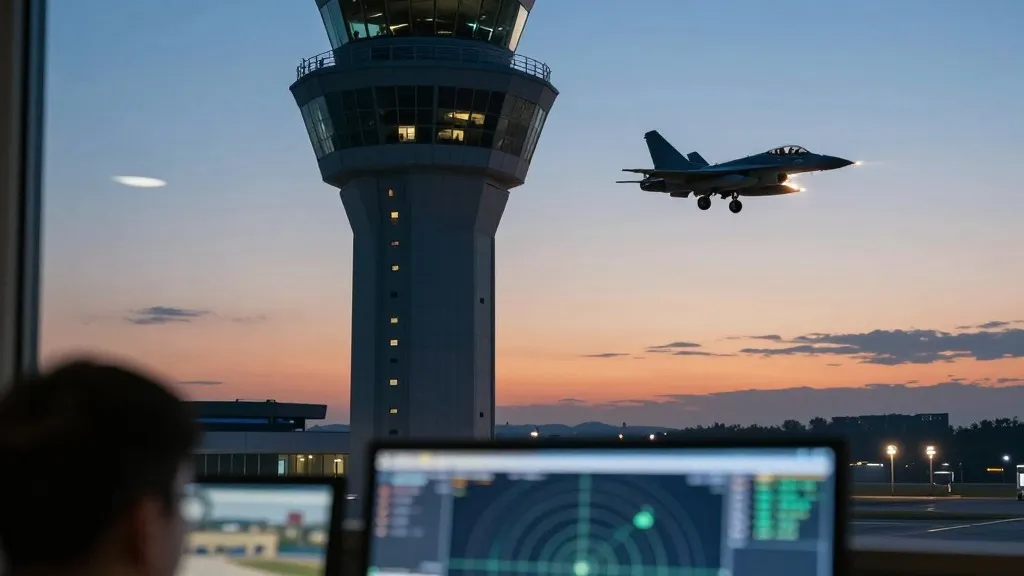
A new accusation has intensified friction between Washington and Baghdad, with Iran-backed groups in Iraq claiming that United States fighter jets and reconnaissance planes repeatedly entered Iraqi airspace. The Islamic Resistance in Iraq, a coalition of militias aligned with Tehran, stated that they documented 171 such violations between September 30 and last Friday. While these allegations have not been independently confirmed, they arrive at a critical moment as the US-led coalition formally concluded its military mission in the country on September 30. This timing suggests the incidents are being used to bolster the case for retaining armed forces outside of state command.
The numerical claim of 171 incursions serves as a central point of contention in a broader dispute over sovereignty and security. The militias argue that Baghdad is yielding to American pressure by reducing commercial flights and closing border crossings with Iran. For the Iraqi government, the period following the coalition's withdrawal represents a unique opportunity to assert control over the country's military assets. Prime Minister Ali al-Zaidi has extended the deadline for this consolidation process to June 30, 2027. By that date, he aims for no weapons to remain outside the framework of the state, a goal that divides the armed factions currently operating within Iraq.
The political landscape is split among the various groups that make up the resistance umbrella. According to reports from Rudaw, Kataib Hezbollah and Harakat al-Nujaba have firmly rejected the disarmament initiative, viewing their arsenals as essential for confronting Washington and Israel. In contrast, Harakat Ansar Allah al-Awfiya and Kataib Sayyid al-Shuhada have expressed a willingness to cooperate with government measures. This division highlights the challenge of unifying diverse interests under a single state policy, particularly as some leaders insist that Iraq will soon become a state where weapons are exclusively held by official security forces.
The stakes extend beyond domestic politics to include regional security dynamics. The US State Department recently updated its travel advisory for Iraq, warning of increased threats from Iranian-backed groups. The advisory notes that Houthi attacks on Saudi Arabia, including strikes on civilian airports and infrastructure, could trigger wider regional escalation. It explicitly states that the Iraqi government cannot guarantee the safety of US citizens against sudden outbreaks of violence. The department also highlighted that terrorists, including ISIS and Iran-aligned militias, actively target American persons and interests through drones, indirect fire, and improvised explosive devices.
Potential targets for these attacks include airports, energy infrastructure, hotels, and diplomatic facilities. This warning underscores the risk that international companies and citizens face as the security environment becomes more volatile. The State Department's assessment reflects a persistent view that Iran-aligned militias remain a significant threat, even after the formal end of the anti-ISIS coalition's military operations. This perspective complicates Baghdad's efforts to present a unified front to its international partners.
These developments occur alongside other regional actions involving Iran. On Saturday, the Islamic Revolutionary Guard Corps reported targeting a gathering center for the Kurdistan Free Life Party, an Iranian Kurdish opposition group. Although the attack took place inside Iran, it has implications for Iraq, where Tehran has previously targeted similar opposition groups. Clashes between the IRGC and the party's armed wing have intensified over the past week, with Iran using drones and artillery in mountainous regions. The IRGC described the operation as a preemptive strike against members allegedly preparing attacks, further illustrating the interconnected nature of security challenges in the region.
Amid these shifts, US intelligence has reportedly warned of increased Iranian efforts to assassinate American diplomats and officials. A memorandum from the National Intelligence Director to the Secretary of State indicated that some alleged plots had reached advanced stages. This intelligence has prompted Washington to reduce staffing at several embassies. As Baghdad seeks to consolidate state control over armed factions, these external pressures and internal divisions create a complex environment where stability remains fragile and the risk of new confrontations continues to grow.
Source: The Jerusalem Post