Borderlands Become New Opium Hub as Cultivation Shifts from Afghanistan to Pakistan and Iran
Satellite data and local testimony indicate a major relocation of poppy farming to the tri-border region, driven by instability and the Taliban's initial narcotics ban.
By Benjamin Bernard ·
David Mansfield, a UK-based expert on illicit drug markets, reports that the remote borderlands shared by Afghanistan, Pakistan, and Iran have evolved into a central hub for global opium production. This shift follows a sharp decline in output within Afghanistan after the Taliban implemented a comprehensive ban on narcotics in 2022. While the militant group did not eliminate all cultivation, the primary growth has moved across the border into neighboring territories.
Mansfield, author of a recent analysis for the British firm Alcis, states that the combination of the Taliban's ban and rising instability in the tri-border zone created ideal conditions for expansion. He identifies Pakistan's Balochistan province and Iran's Sistan-Baluchistan province as the epicenters of this new production wave. The expert warns that if current trends continue, international heroin supplies could increase significantly, providing funding for armed groups and potentially escalating regional violence.
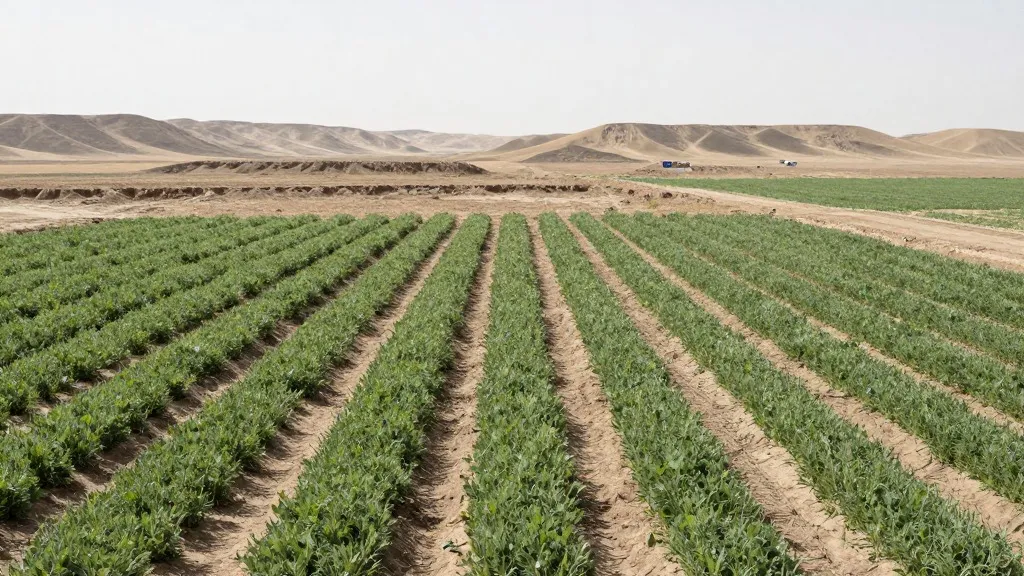
In Pakistan, the southwestern province of Balochistan appears to be at the heart of the change. The region has long faced insurgency from separatist groups, and violence has intensified in recent years. Although Islamabad has denied widespread cultivation and claims that found crops are destroyed, satellite analysis suggests otherwise. Alcis identified more than 9,000 hectares of poppy fields in Balochistan alone, with the majority concentrated in the districts of Loralai and Killa Abdullah. The United Nations Office on Drugs and Crime has noted that while production remains marginal compared to historical levels, rising eradication figures suggest a clear spillover effect.
Local officials and residents offer conflicting accounts of the situation. Abdul Qahar Wadan, a former national assembly member, alleges that senior military officials and power brokers support the industry through commissions. In contrast, Monawar Hussain, the chief administrative officer of Killa Abdullah, argues that a recent eradication campaign reduced the crop, a claim that 2026 satellite imagery does not fully support. Anonymous farmers in the area describe a system of bribes paid to local authorities, noting that crops are sometimes planted on barren land solely to be destroyed for public relations purposes.
The economic drivers for farmers are clear. Traditional fruit farming has been devastated by drought, flash floods, and insecurity. Lala Jan Kakar, a resident of Killa Abdullah, explained that the demand and income from poppies far exceed those from fruit. He noted that Afghan growers from Kandahar and Helmand are crossing the border to lease land, bringing capital and expertise. These farmers invest in solar-powered wells and share profits with local landowners. Because poppies can be harvested twice a year, many farmers doubled their cultivated area in 2026, a trend Mansfield describes as a stark indicator of higher future output.
A similar pattern is emerging in Iran, where Afghan farmers operate as tenants and sharecroppers, often relying on family connections. While cultivation has appeared in several provinces, Sistan-Baluchistan remains the primary region. 2026 satellite images show extensive fields, some equipped with drip irrigation, a costly investment that implies growers expected low risk of eradication. Mansfield observes a shift from mixed farming to large-scale monoculture. Iranian authorities, currently focused on the conflict with the United States and Israel since late February, have been unable or unwilling to destroy the 2026 crop. Experts expect further growth in 2027 as the economy weakens and separatist tensions rise.
Inside Afghanistan, production is also rebounding despite the official ban. Cultivation is concentrated in northeastern Badakhshan Province, which accounts for roughly half of the national output, and in several southwestern provinces. Farmers in these areas have defied the ban due to drought and debt. Mansfield notes that southwestern cultivation almost doubled between 2025 and 2026, often hidden within wheat fields. A recent Taliban directive barring home searches without a court order is seen as a significant concession to farmers. However, Mansfield warns that this leniency may encourage widespread growth beyond walled compounds, potentially leading to a dramatic rise in Afghan opium production in 2027.
The expansion of the drug trade is deeply linked to regional security dynamics. Mansfield emphasizes that rising production reflects and fuels violence, as armed groups compete for tax revenues from narcotics, people smuggling, and other cross-border trades. The shift in cultivation geography underscores the complex interplay between economic hardship, political instability, and illicit markets in the region.
Source: RFE/RL