Rasoulof, Sadat reject separate Oscar slot as Displacement Fund hits Tokyo
Directors argue exiles should compete in standard categories while Cate Blanchett’s project premieres five new shorts.
By Benjamin Bernard ·
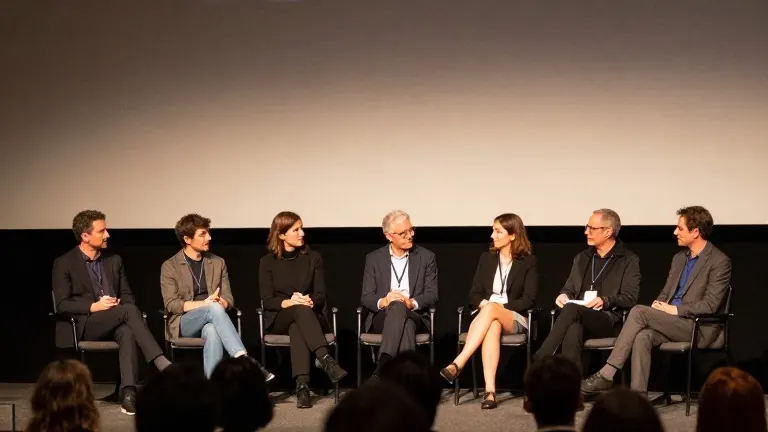
Two prominent filmmakers rejected a proposed separate Oscar category for exiled artists during a panel at the Tokyo International Film Festival on Thursday.
The discussion followed a recent rule change by the Academy of Motion Picture Arts and Sciences that allows displaced directors to compete for major awards. Top Academy leadership attended the festival this week to engage with international industry figures.
Shahrbanoo Sadat, an Iranian-born Afghan director, expressed skepticism about creating a distinct label for her work. She noted that she does not see herself as a displaced filmmaker. “I’m not sure if I would love to be in the category of displaced, even if they give me the Oscar,” Sadat said.
Mohammad Rasoulof, an Iranian filmmaker, agreed that specific categories might create complications. He stated that he prefers to focus his energy on production rather than distribution logistics. “I would really like to focus my efforts on closing the distance and being closer,” Rasoulof said.
Clare Stewart, managing director of International Film Festival Rotterdam, managed the Displacement Film Fund. She pointed out that Rasoulof’s film “The Seed of the Sacred Fig” had already benefited from the current rules. The movie was nominated in the previous cycle and represented Germany. Stewart argued that the current system creates useful dialogue without needing a new structural change.
Cate Blanchett, a co-founder of the fund, supported the Academy’s recent decision. She described the recognition as profound because it acknowledges the reality of artists whose careers are interrupted by conflict. “The fact that the Academy is recognizing that, I think is, it sounds like a small thing, but it is very profound,” Blanchett said.
The first cohort of the Displacement Film Fund includes five directors. Their projects have already completed a qualifying screening in Los Angeles. Another screening is scheduled for New York in mid-November. Blanchett emphasized that these showings allow American audiences to view the films, not just the Academy.
The fund was formed at the UNHCR Global Refugee Forum in December 2023. It launched at the Rotterdam festival in January 2025. Partners include Mastermind, Uniqlo, the Tamer Family Foundation, the Amahoro Coalition, and Droom en Daad. The SP Lohia Foundation joined as a main partner this year. A second group of filmmakers is currently producing their projects.
Rasoulof’s short “The Sense of Water” explores the isolation of a migrant learning a new language. Sadat’s short “Super Afghan Gym” deals with discomfort in one’s own body. Yakusho Koji, a Japanese actor, attended a post-screening event. He described Rasoulof’s film as quiet and calm. Blanchett asked Koji when the two of them would work together.
Sadat was born in Iran to parents who fled the Soviet-Afghan War in 1979. She moved to central Afghanistan at age 11. She later moved to France and Germany after Afghanistan collapsed. Her feature film “No Good Men” opened the Berlin Film Festival and is set for release in Japan next year. She stated that she wanted to explore feelings of not being comfortable in her home, which is her body.
Source: Variety