Chicago Firm Converts Vacant Office Space Into Vertical Farms
FARMZER0 uses 650 square feet of empty commercial floor to grow edible greens for local businesses, targeting a downtown vacancy rate of up to 30%.
By Benjamin Bernard ·
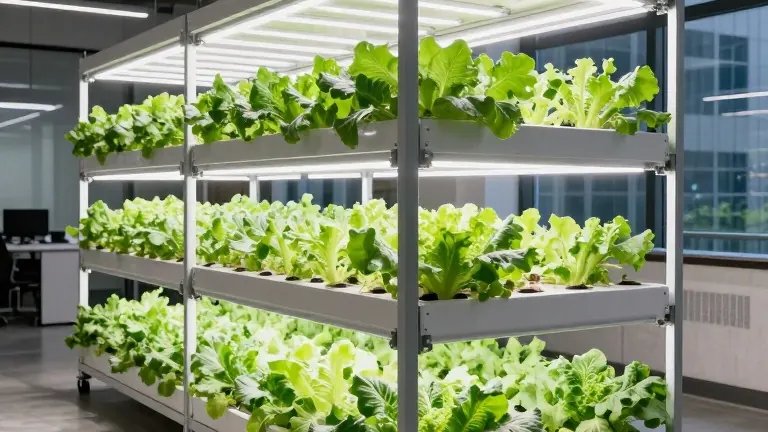
Downtown Chicago faces a structural mismatch: a surplus of empty commercial square footage and a demand for locally sourced food. Russell Steinberg, founder and CEO of FARMZER0, is addressing both gaps by installing vertical farming systems inside unused office towers. His company targets three specific urban problems simultaneously: office vacancy, public health, and food system inefficiencies.
Steinberg estimates that Chicago holds approximately 45 million square feet of vacant office space. He calculates that only 2 million square feet of that total would be required to convert into agricultural space to provide adequate vegetables for the entire city. The company currently operates in a location that utilizes about 650 square feet of formerly vacant office area.
The post-pandemic recovery in the downtown business district has left vacancy rates between 25% and 30%. Steinberg notes that older office buildings present structural challenges for repurposing due to outdated infrastructure. Newer commercial spaces, however, are easier to adapt for vertical farming operations. FARMZER0’s systems require a continuous water supply to keep plants hydrated, though Steinberg states the water usage is lower than that of a fully functioning office.
The operation produces edible greens that are delivered to restaurants, caterers, office buildings, and residents of nearby high-rises. Blue Plate Chicago, a local catering service, purchases these greens for its menu. Matthew Wilde, the chef for Blue Plate, describes the partnership as a way to support local production in an urban setting. He notes that the company utilizes space that would otherwise remain vacant while providing a high-quality product.
Dr. Kimberly Gray, a professor of civil and environmental engineering at Northwestern University, has researched urban reinvention. She views vertical farming as a viable option for metro areas rethinking their infrastructure. Gray argues that bringing fresh produce to urban communities can reduce costs and lower the environmental impact of goods delivery, a process often described as the last mile.
Steinberg reports receiving inquiries from several cities interested in replicating the high-rise farming model. He is currently working with city officials in Los Angeles. The goal is to establish a similar project in time for the 2028 Olympic Games.
The FARMZER0 operation remains largely quiet except during harvesting, when workers use scissors to cut the greens. The company continues to expand its footprint within the Chicago downtown district, focusing on properties with available floor space.
Source: WUSF Public Media
More Business · Bad Business · Report a business · Got a Story?