Midterm Election Sets Stage for Fight Over Defense, Crypto, and Health Funding
A shift in congressional control could alter regulatory leverage for major sectors, from Lockheed Martin's F-35 contracts to Coinbase's pending rules.
By Benjamin Bernard ·
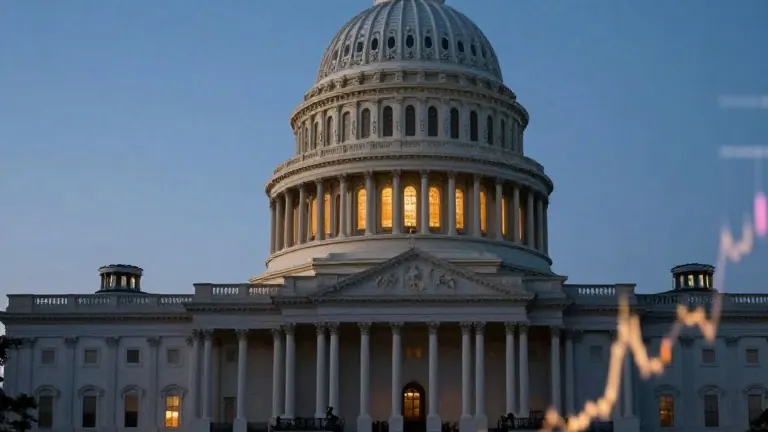
Washington is a core component of the business model for several of the largest American corporations.
Lockheed Martin derives approximately 70% of its sales from the U.S. government. Molina Healthcare relies on Medicaid for 75% of its premium revenue. Coinbase awaits final congressional rules for the cryptocurrency industry.
The upcoming midterm election determines which party holds the leverage in these relationships. A Democratic victory in either chamber of Congress would grant the party subpoena power and committee control. This shift would allow lawmakers to compel testimony, demand documents, and investigate specific firms. President Donald Trump would retain his veto power and authority over tariffs, immigration, and federal regulation regardless of the outcome.
Morgan Stanley analysts published data on Thursday regarding historical market performance. The S&P 500 has gained an average of 23% in the year following midterms when Congress was split under Republican presidents. That average drops to 16% when Democrats control both chambers. Ariana Salvatore, head of U.S. public policy research at Morgan Stanley, stated that this historical blueprint may not hold this time, while maintaining a constructive outlook on the U.S. equity market.
Democratic legislators have already begun previewing their investigative powers. On Oct. 21, Sen. Richard Blumenthal, D-Conn., sought records from Cisco, Salesforce, ServiceNow, and Kraken regarding the White House ballroom. Apple and Nvidia each committed $25 million to that project, according to records obtained by The Washington Post. Rep. Jamie Raskin, D-Md., has separately requested records involving tariff exclusions and communications with Apple's former CEO Tim Cook.
Congressional probes carry operational risks for executives. Subpoenas consume management time and reveal internal communications. Monica Guerra, Morgan Stanley's head of policy and geopolitical strategy, noted that such probes create volatility through negative headlines. Democrats have signaled interest in investigating Trump family businesses, contractors, and firms tied to Elon Musk and DOGE.
The outcome will directly impact federal spending on healthcare. The 2025 tax and spending law is projected to reduce federal Medicaid spending by $911 billion through 2034, according to KFF. New work requirements for Medicaid enrollees take effect Jan. 1. Molina Healthcare generated $32.2 billion from Medicaid in 2025. A Democratic-controlled chamber could not repeal the law alone but could use budget negotiations to delay cuts. Jeff Buchbinder, chief equity strategist at LPL Financial, said Democrats will likely push back on those Medicaid cuts.
Defense contractors face a contest over which programs receive funding. The White House requested $1.5 trillion for national defense in fiscal 2027. It also sought an $87.6 billion supplemental appropriation for fiscal 2026, primarily for military operations related to Iran. Lockheed Martin recently reached a framework agreement for 850 F-35 fighter jets over a decade, but Congress must authorize and fund the purchase. Guerra identified shipbuilding, autonomous systems, and missile defense as likely areas for growth.
The cryptocurrency industry awaits durable rules. The Senate failed to advance the Trump-backed Clarity Act in September. Shares of Coinbase and Circle fell as much as 11% on that news. Democratic gains could allow the party to demand stricter consumer safeguards and limits on yield-bearing stablecoins. Sam Stovall, chief investment strategist at CFRA Research, said the industry primarily wants to know the rules for the coming year.
Banks are watching regulatory changes. Federal regulators estimate their proposed capital overhaul would cut requirements for the largest banks by roughly 4.8%. Senate control shapes who fills future regulatory vacancies. AI infrastructure faces local political friction. A September House vote, 417-3, required state regulators to consider making large data centers cover additional electricity infrastructure costs. The measure stalled in the Senate, 57-43. Salvatore noted that the election can have meaningful consequences, but on a highly localized basis.
Source: CNBC
More Business · Bad Business · Report a business · Got a Story?