Meta Runs Google Chips in Live Systems, Marking First External TPU Sales
Google's custom silicon is now processing live AI tasks for Meta, a move that challenges Nvidia's software dominance by making PyTorch native to the hardware.
By Chloe Zhao ·
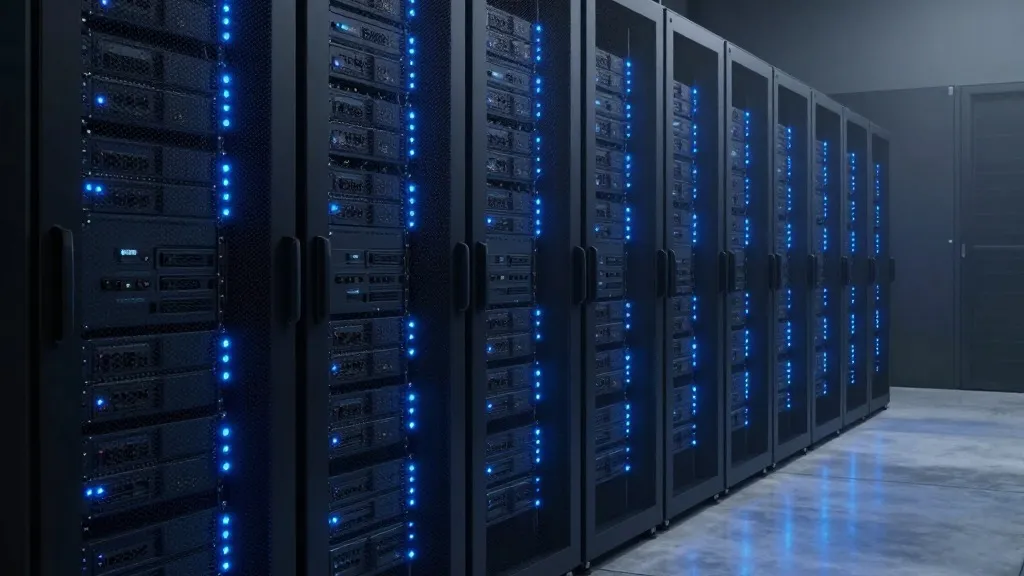
Google's tensor processing units are now executing production artificial intelligence workloads for Meta, marking the first time the chips have been sold to an external customer. This development was confirmed via a new PyTorch-native version of the SGLang inference engine, which was detailed on Google's developer blog. The release signifies a major shift in the AI hardware landscape, as it allows Meta to run its models on Google's infrastructure without relying on Google's proprietary JAX framework.
The update introduces a native option for PyTorch on TPUs, largely eliminating the need for code rewrites. Previously, inference engines like SGLang and vLLM depended on JAX to function on Google's hardware. Zongwei Zhou, Meta's PyTorch-TPU lead, stated that the new setup is running in production today following a close three-way collaboration between Meta, Google, and the SGLang team. Zhou, whose team operates at RadixArk, described the result as a remarkably mature, PyTorch-native serving stack.
Meta has long sought to avoid being tied to a single hardware architecture. Jana van Greunen, director of PyTorch engineering at Meta, noted in a Google post that the company cannot be constrained by one system. She explained that the new TorchTPU system enables the deployment of PyTorch workloads directly to Google TPUs. Google confirmed it co-developed this technology with Meta's engineering team. This is not the first time Meta has experimented with TPUs, as research teams used them through the older PyTorch/XLA bridge from 2020 to 2023 before those contracts were canceled.
The announcement arrives at a critical moment for the AI market, following Amazon's decision to open-source its own PyTorch backend for Trainium chips. Both moves appear designed to weaken Nvidia's software lock-in. In terms of performance, a tuned vLLM setup on the seventh-generation Ironwood TPU reportedly exceeds 700 tokens per second for a single user. This test, conducted by Inferact, used 16 chips with speculative decoding and outperformed a comparable Nvidia GB200 setup, which achieved 452 tokens per second.
The new engine is already showing significant throughput advantages. Kernels for specific models deliver roughly 1.4 to 2 times the baseline throughput of Nvidia hardware at small batch sizes. SGLang-TorchTPU will continue to expand its model support, starting with DeepSeek V4.1 Flash and Reflection Beam. The developers are also working toward Day 0 TPU support for new open models, a goal they aim to reach by the first quarter of 2027.
While the exact location of Meta's production TPUs remains unclear, reports suggest negotiations included cloud rentals in 2026 and direct purchases in 2027. Meta is reportedly a party to a multi-year rental agreement. Google, Meta, and RadixArk plan to share further details at the SGLang Summit 2026, which is scheduled for November 12 and 13 in San Francisco.
Source: Tom's Hardware · original report published