Warhound Raises $200M to Clone Engineered Military K-9s
A new startup backed by Colossal and Anduril is using gene editing to create specialized working dogs, aiming to reduce U.S. reliance on foreign imports.
By Benjamin Bernard ·
The United States military has long depended on foreign sources for its canine units, a dependency that a new venture claims is becoming unsustainable. On Thursday, Warhound emerged from stealth mode, announcing a $200 million funding round to begin engineering genetically modified dogs for military, law enforcement, and emergency response use.
The startup has secured investment from Sequoia, 8VC, Corner Ventures, and In-Q-Tel, the latter being a venture firm supported by the CIA and other U.S. intelligence agencies. This capital raises the company’s valuation to $1.2 billion. The primary goal is to produce dogs capable of handling dangerous tasks, such as bomb detection and search operations, that are often too risky for humans or too complex for current machines.
The motivation behind the venture stems from a supply crisis in the U.S. defense sector. According to the company’s launch materials, over 80% of the military’s working dogs are imported from Europe, and fewer than half of those imported animals are deemed fit for service. This situation leaves the country increasingly reliant on foreign nations for animals that play critical roles in national security.
Warhound’s approach combines biological engineering with advanced technology. Ben Lamm, co-founder and head of Colossal Biosciences, met Palmer Luckey, founder of Anduril, roughly a year ago at a conference where the topic of working dog welfare was discussed. Lamm subsequently researched the breeding of working dogs, noting that many fail training due to inherited issues like poor eyesight, cancer predispositions, or hip dysplasia. His team has begun by establishing a biobank of cell lines from top-performing breeds, specifically the Belgian Malinois and the German Shepherd. The plan is to edit these genes to enhance speed, agility, and olfactory capabilities while removing genetic markers associated with health problems.
While Colossal provides the genetic engineering expertise, Anduril will supply the hardware and software to support the dogs in the field. This includes protective gear like vests and goggles equipped with data sensors. These devices will send real-time information to human handlers, improving situational awareness. Lamm described this technology as an enhancement that sits “on top of the dog, not in the dog,” aiming to make the animals safer and more effective in their duties.
In terms of corporate structure, Luckey serves as a partner in the venture but holds no equity. Colossal owns equity in Warhound and supports the operation by licensing its cloning technology. Colossal is currently known for its de-extinction efforts, using artificial intelligence to identify and copy animal genes for projects involving species like the dodo and the mammoth. For Warhound, Colossal’s sister company, Viagen, will handle the actual cloning process, utilizing a technology that boasts a high success rate.
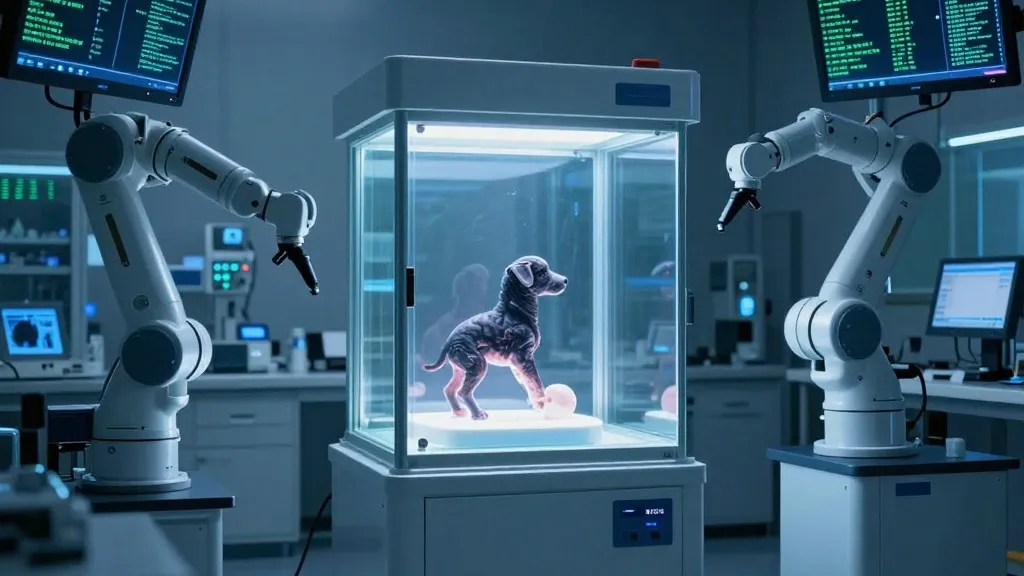
The timeline for these engineered canines is aggressive. Lamm stated that the first batch of dogs is currently being cloned and incubated, with births expected in the early months of next year. Ideally, these dogs will begin active service within two years. While pricing has not yet been determined, the company anticipates selling to first responders, the Department of Defense, military service groups, and police forces. Lamm noted that the company has already briefed numerous government entities regarding the business model and operations.
Regarding the welfare of the animals, Warhound is working under the guidance of the American Humane Society to certify its training programs. The organization aims to ensure that these genetically enhanced dogs are treated humanely throughout their service lives. Upon retirement, the dogs are expected to enter the Society’s Military Working Dog Reunification Program, which helps place retired military dogs into permanent homes. The American Humane Society issued a statement praising the collaboration, saying it looks forward to ensuring the animals are treated with the scientific and ethical care they require.
Source: TechCrunch · original report published