Autonomous Vehicle Lighting: Federal Regulators Propose Mandatory Cyan Signals
The NHTSA is drafting new rules that would standardize blue-green lights for driverless cars while removing outdated requirements for physical controls.
By Chloe Zhao ·
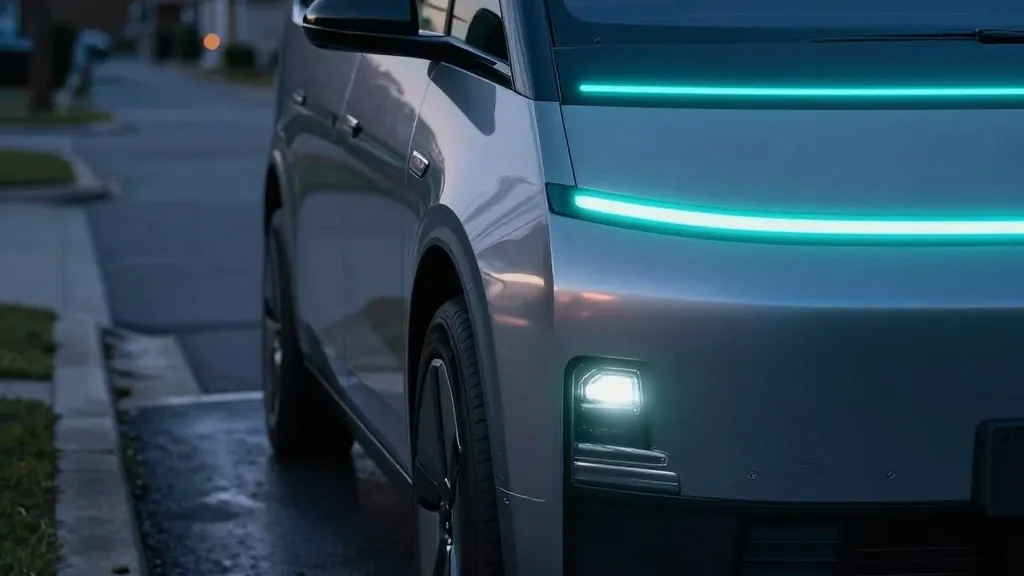
The National Highway Traffic Safety Administration has officially proposed that driverless vehicles use cyan-colored lights to signal when they are operating autonomously. This move aims to settle a long-standing debate in the automotive industry regarding how robotaxis should visually communicate their status to other road users. The agency released these changes as part of an update to Federal Motor Vehicle Safety Standard No. 108, marking a significant step toward standardizing the visual language of autonomous driving.
The core of the proposal centers on the use of a distinct blue-green hue. Regulators believe this specific color fills a visual gap in the current traffic spectrum. Today, vehicle lighting is already crowded with reds for braking, ambers for turning, whites for headlights, and flashing blues and reds for emergency services. By introducing cyan, the NHTSA hopes to provide a clear, consistent signal to law enforcement and other drivers that no human is at the wheel, reducing potential confusion on the road.
While the idea might seem new, there is some prior history with similar concepts. Mercedes-Benz previously received state-level approval to use turquoise lights for its Level 3 Drive Pilot vehicles, though the company has since shifted its strategy toward a Level 2++ system. Despite that change in corporate direction, the federal government is moving forward to establish a nationwide standard. This uniformity is intended to allow major players in the space, including Waymo, Nuro, Zoox, GM, and Mercedes, to adopt the same lighting configurations without creating a patchwork of different signals.
Under the proposed rule, the cyan marker lights would be optional for manufacturers. However, if a company chooses to install them, the federal standards would dictate the exact color, brightness, and location of the lamps. The goal is to prevent a situation where different automakers use varying shades or placements, which could lead to inconsistency and confusion for drivers trying to interpret the signals. This approach balances flexibility for manufacturers with the need for a standardized visual code.
Beyond adding new lights, the proposal seeks to remove several existing requirements that may not apply to vehicles without human drivers. Current regulations mandate the presence of physical hazard switches, manual beam shifters, and turn levers inside the vehicle. The NHTSA is proposing to eliminate these requirements, recognizing that they are often unnecessary for fully automated systems. This streamlining is part of a broader effort to reduce administrative hurdles for modern vehicle architectures.
The agency is also updating technical standards to accommodate modern hardware. Specifically, the proposal revises the 12.8-volt testing standard to allow automakers to build around contemporary LED systems without facing excessive regulatory friction. Additionally, the NHTSA is considering removing rules that dictate the specific vertical placement of high-beam lights relative to low-beam lights, further simplifying the design process for new vehicles.
This regulatory update is part of a larger push by the Department of Transportation to facilitate the deployment of autonomous vehicles. The administration aims to make it easier for manufacturers to design cars that lack traditional human-operated controls, such as steering wheels and pedals. By clarifying these standards, the government hopes to accelerate the integration of driverless technology into the mainstream transportation network.
However, the path to full implementation is not without scrutiny. Regulators continue to enforce current rules strictly while these new standards are developed. Just last month, the NHTSA opened an audit query into the Tesla Cybercab to examine the technical data Tesla used to certify the vehicle. The audit focuses on the absence of design features like sideview mirrors, pedals, and a steering wheel, which are currently required under existing Federal Motor Vehicle Safety Standards. This ongoing oversight highlights the careful balance regulators are striking between innovation and safety compliance.
Source: The Verge · original report published