Brazilian Voters Face Decisive Sunday Vote After Tight Final Campaign Push
A final round of rallies and a closely contested poll indicate that Brazil's presidential run-off will determine the nation's political trajectory for the next four years.
By Megan Greco ·
Brazil enters its final day of campaigning for a presidential run-off that is poised to reshape the nation's political landscape, with both major candidates gathering large crowds to rally support before voters head to the polls on Sunday. The contest, which has remained within the margin of error for weeks, represents a critical juncture for the country's direction. The outcome will determine whether the incumbent left-wing administration continues or if Brazil joins a broader regional trend toward the political right. This final push highlights the intensity of a campaign that has exposed deep fissures in the electorate over economic policy, crime, and the role of the state.
The statistical picture remains remarkably tight, leaving little room for error for either side. In the first round of voting, Flavio Bolsonaro, a senator and the son of former President Jair Bolsonaro, secured 47 percent of the vote. He narrowly edged out Luiz Inacio Lula da Silva, who received 45 percent. Recent polling data confirms that this narrow advantage has persisted. A CNT/MDA poll released on Saturday showed Bolsonaro leading with 46.3 percent of the vote against Lula's 45 percent. This result follows a survey from the same organization a week earlier, which placed Bolsonaro ahead by 46.8 percent to 45.9 percent. The margin of error for these polls is 2.2 percentage points, a range that encompasses the current gap between the two contenders, suggesting the election is effectively a coin toss until the final tally.
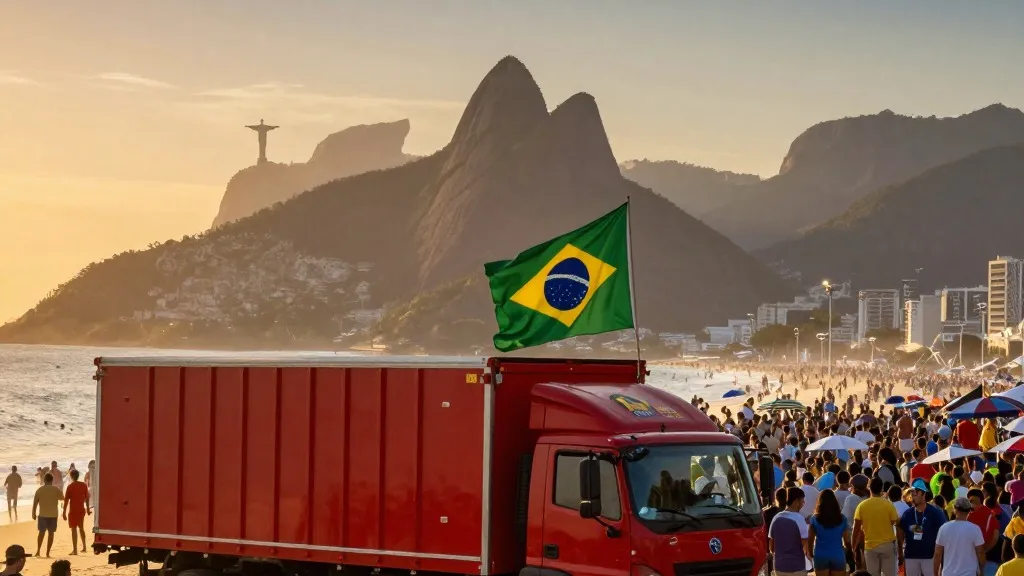
Luiz Inacio Lula da Silva, the 80-year-old incumbent, spent Saturday addressing hundreds of supporters at Copacabana Beach in Rio de Janeiro. Dressed in a red hat, the president spoke from a campaign truck while waving a Brazilian flag to the crowd. Lula, who is seeking a fourth non-consecutive term, focused his messaging on national sovereignty and his rival's international ties. He drew a sharp contrast between his own platform and that of Flavio Bolsonaro, specifically referencing Bolsonaro's relationship with US President Donald Trump. "The people must choose either someone who kisses the national flag or someone who kisses the American flag," Lula told the gathering. His presence on the iconic beach served as a visual anchor for his campaign, emphasizing continuity and his long-standing connection to the Brazilian populace.
In the southeastern state of Minas Gerais, Flavio Bolsonaro’s supporters held their own significant rally. The event featured a distinctive display of solidarity, with hundreds of motorcyclists arriving in Brazil's yellow national football shirts. The gathering underscored the grassroots energy behind the senator's campaign. One participant, Ebert Dorigo, articulated a core theme of the right-wing platform: the need to reduce reliance on state assistance. Speaking to the news agency AFP, Dorigo argued that the Workers' Party, Lula's political group, had fostered a culture of dependence on government welfare. He believed the country required a shift in direction toward greater personal responsibility. "The values we uphold are nation and family," Dorigo stated. He contended that Brazil is currently divided because welfare-based policies have led some citizens to overlook the importance of hard work and individual achievement in driving improvement.
The campaign has been marked by a bitter tone, with both sides trading accusations over the management of the economy and the handling of crime. Flavio Bolsonaro has pledged specific policy changes if elected, including the addition of hundreds of thousands of new prison places to address public safety concerns. He has also promised to cut government spending, a stance that appeals to voters skeptical of the incumbent's fiscal management. The stakes are heightened by the personal history of the Bolsonaro family. Jair Bolsonaro, who served as president from 2019 to 2022, is currently serving a 27-year prison sentence for attempting a coup after losing the 2022 election to Lula. This context adds a layer of political drama to the current race, as voters consider the legacy of the previous administration's leader.
Despite the intensity of the rallies, the tone shifted slightly during the final debate held on Friday. The two candidates adopted a calmer demeanor, though they continued to exchange pointed criticisms regarding their respective records and the state of the economy. This measured approach may reflect a strategy to avoid new gaffes in the final hours before the vote. The debate served as a last opportunity for voters to compare their positions directly, but the underlying divisions over economic philosophy and national identity remain unresolved.
For many voters, the choice is not driven by enthusiasm for a favorite candidate but by a careful calculation of risk. Gabriela Ribeiro Viana, an event organizer who spoke to AFP, captured the sentiment of a portion of the electorate that feels constrained by the available options. "If there were any other candidate, that would be a better option. But we're stuck choosing between the worst, the horrible, and the lesser evil," Viana said. Her comment reflects a pragmatic approach to voting, where the goal is to avoid a preferred negative outcome rather than to secure a positive one. This dynamic suggests that the final margin of victory may hinge on how effectively each candidate can persuade undecided voters that their choice represents the lesser risk for the country's future.
The result of Sunday's election will have immediate implications for Brazil's domestic policy and its international standing. A victory for Lula would extend his tenure and potentially solidify the current economic model, while a win for Flavio Bolsonaro would signal a definitive pivot toward fiscal austerity and a stricter law-and-order approach. The close nature of the race indicates that the Brazilian electorate is deeply polarized, with significant segments of the population favoring each of the two distinct visions for the country. As the campaign concludes, the focus shifts to the counting of votes, a process that will determine which path Brazil takes in the years ahead.
Source: Al Jazeera