Vucic admits loss as student bloc claims Serbian majority
Voter turnout hit a 30-year high as the Student List is projected to win 140 seats, ending the Serbian president's 14-year hold on power.
By Chloe Zhao ·
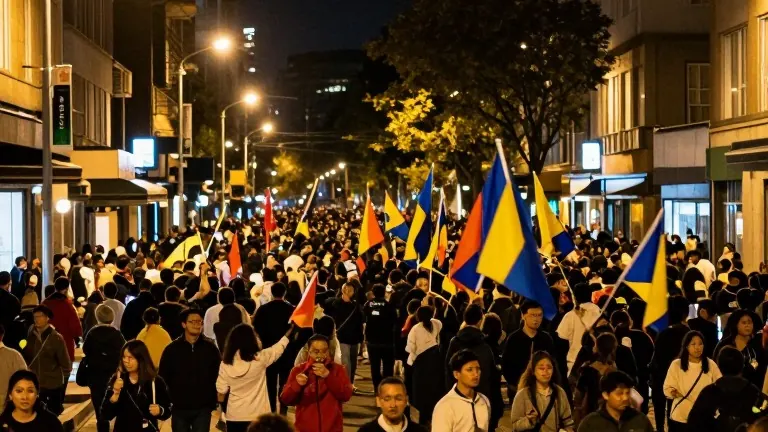
Serbian voters chose change on Sunday, turning out in record numbers to end the political dominance of President Aleksandar Vucic. The turnout reached its highest level in more than three decades, signaling a sharp shift in public sentiment after two years of sustained protests.
Vucic, the leader of the Serbian Progressive Party, conceded defeat to his supporters. He acknowledged the loss after sample data indicated his list would secure 105 seats in the 250-member parliament. The Student List, a movement rooted in youth activism, was projected to capture between 135 and 140 seats, giving it a clear mandate to form a government.
The movement originated in November 2024, when 16 people died in Novi Sad after a train station canopy collapsed. What began as a grief response evolved into a political platform led by Ilija Srdanovic, a professor at the Faculty of Medicine in Novi Sad. The group pledged to fight corruption and restore citizen rights, drawing support from university professors, doctors, and workers.
Vucic, who has held power in various capacities since 2012, had described the demonstrators as blockaders attempting to destabilize the country. He resigned in September under pressure and called for early elections, though he retained significant influence over state policy until the final vote. His 14-year tenure included a transition from a nationalist politician to a centrist European ally.
The economic record under Vucic showed substantial growth alongside rising costs. Unemployment dropped from 26 percent to between 8 and 9 percent, and nominal GDP nearly tripled to approximately 90 billion euros. Foreign direct investment peaked at a record 5.2 billion euros in 2024, while the state built a network of modern motorways. However, critics argue that wage increases have not matched the rising cost of living.
Journalist Safeta Bisevac noted that Vucic initially served as the organizer for the party founded in 2008. She described his administration as establishing almost complete control over the state apparatus while fulfilling few of its initial promises to fight organized crime. The SNS took power in 2012, but Bisevac said the results of those anti-corruption efforts were modest.
Political scientist Dusko Radosavljevic characterized the student victory as a response to systematic pressure on social institutions. He stated that the students gave voice to the justified anger of citizens who felt critical thinking was being pushed out of public media. Intelligence services, according to Radosavljevic, spent more time monitoring political opponents than tracking external threats.
Vucic's political career began in 1993 when he joined the ultranationalist Serbian Radical Party. His early years were marked by nationalist rhetoric, including a 1995 parliamentary remark about the Srebrenica genocide. His former party leader, Vojislav Seselj, was sentenced to 10 years in prison in 2018 for wartime crimes, and Seselj's son appeared on Vucic's election list this year.
Source: Al Jazeera