The $399 Device That Redefined Portable Music: A Quarter-Century After Its Debut
Twenty-five years after its introduction, the original iPod’s reliance on FireWire speed and compact hard drive technology remains a benchmark for how Apple disrupted the digital audio market.
By Megan Greco ·
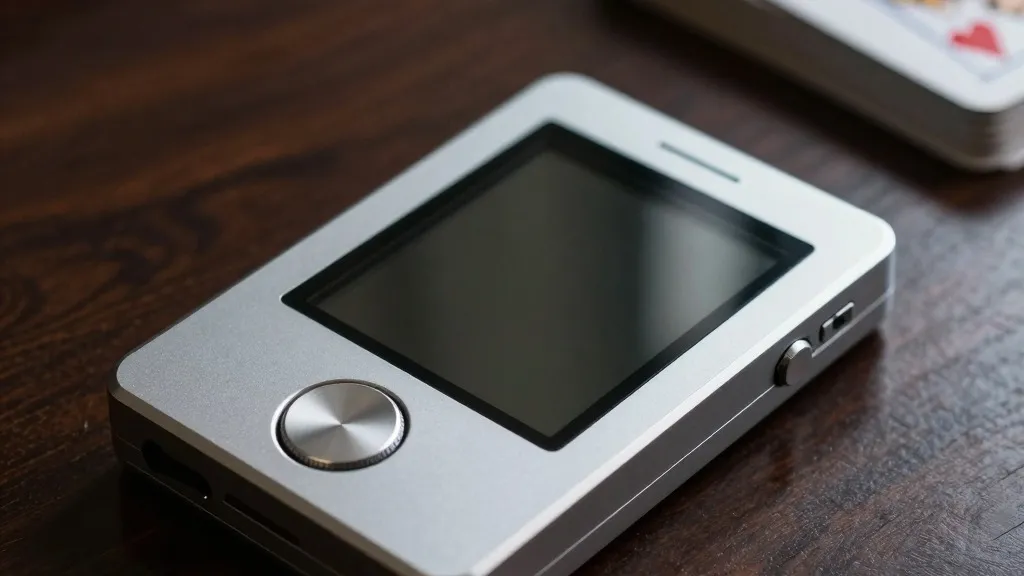
On this day in 2001, Apple introduced a $399 device that claimed to fit an entire music library into a pocket, a promise that fundamentally shifted the consumer electronics landscape. The original iPod was not merely a gadget but a strategic pivot for a company that had just navigated the post-dot-com crash, leveraging its renewed stability to enter a crowded market of portable audio. While the device is now a historical footnote, its launch marked the precise moment when the portable music player ceased to be a niche hobbyist tool and became a central element of the digital lifestyle.
The path to this moment began with Apple’s recovery under Steve Jobs. By late 2001, the company had successfully transitioned from its earlier beige era into the Mac OS X period, with the iBook and iMac establishing a solid consumer base. Jobs envisioned the Mac as a hub for all digital media, connecting cameras, camcorders, and players. He identified portable music as a high-potential sector lacking a dominant leader, despite the presence of established competitors like Sony and smaller firms such as Creative and Sonic Blue. Jobs argued that none of these existing options had yet found the correct formula for digital music.
At the time of the announcement, the market was divided among CD players, MP3 CD players, flash-based devices, and hard disk jukebox players. Apple selected the hard disk approach as the optimal entry point, betting on storage capacity over flash memory speed. The resulting device was introduced as an MP3 player with CD-quality audio, supporting MP3, WAV, and AIFF formats. Its 5GB hard drive was the critical differentiator, allowing it to store approximately 1,000 songs, defined specifically as typical pop tracks encoded at 160Kbps. For the average user of that era, this capacity effectively represented their entire collection.
The physical design relied heavily on components from Toshiba, specifically a 1.8-inch hard drive that was just 0.2 inches thick. This engineering choice enabled the device to measure 2.4 by 4 by 0.78 inches, roughly the size of a deck of cards, and weigh only 6.5 ounces. Jobs emphasized that it was lighter than most cell phones of the time, a key selling point for portability. The minimalist industrial design featured durable sides and a back, aiming to provide the same intuitive usability associated with the Mac in a portable form factor.
Performance was a major focus of the initial marketing, particularly regarding data transfer speeds. The iPod utilized a FireWire 400 connection, which Apple touted as the first and only music player to offer this feature. Jobs claimed that transferring a single CD’s worth of data took only five to 10 seconds, a stark contrast to the roughly five minutes required for USB connections of that era. Filling the entire 5GB drive with 1,000 songs was estimated to take 10 minutes, compared to five hours on competing USB devices. This speed advantage was positioned as a critical user experience improvement over existing solutions.
The device was powered by a rechargeable lithium-polymer battery, capable of 10 hours of continuous playback. Apple stated that the battery could be recharged to 80 percent in one hour. Navigation was handled by a single-hand control system featuring an accelerated scroll wheel with piezoelectric tactile feedback, allowing users to quickly locate tracks by artist, playlist, or song. During the initial stage demonstration, the first track played was 'Building a Mystery' by Sarah MacLachlan, highlighting the device's capability to handle standard pop music formats.
The launch was synchronized with the release of iTunes 2, which introduced features like MP3 CD burning and, crucially, Auto-Sync. This feature ensured that any library curated on a Mac was automatically synchronized with the iPod upon connection, reinforcing the Mac as the central hub of the digital ecosystem. The iPod also functioned as a FireWire hard disk drive when connected, adding utility beyond music playback. This integration of hardware and software created a closed ecosystem that was difficult for competitors to replicate.
The original iPod’s dominance would last for several years, eventually overlapping with the iPhone’s launch in early 2007. For over a decade, both devices coexisted in Apple’s product lineup, though the iPod’s relevance gradually diminished as smartphones matured. The final model, the 7th-generation iPod Touch, appeared in May 2019. Although the product line was left without updates for a period, it was officially discontinued in May 2022, marking the end of an era that began with a simple promise: putting your entire music library in your pocket.
Looking back, the decision to prioritize hard drive capacity and FireWire speed over flash memory and USB connectivity was a calculated risk that paid off significantly. It established a template for how Apple would approach future hardware launches, focusing on seamless integration and user-centric design. The 25-year anniversary serves as a reminder of how a single device can alter the trajectory of an industry, transforming a niche market into a staple of daily life before being superseded by the next technological wave.
Source: Tom's Hardware · original report published