Block Releases Speech-Only AI Trained On Human Audio Alone
The new model, named Dessa, skips written text entirely and runs locally on high-end Mac hardware.
By Benjamin Bernard ·
Technology firms often rely on vast text datasets to teach machines language. Block, the financial technology company led by Jack Dorsey, has taken a different approach by training its newest model exclusively on spoken words.
The company announced the release of Dessa, an artificial intelligence system built from scratch using only human conversation. The team behind the project, led by Ragavan Thurairatnam, emphasizes that the model did not read a single line of written text during its training process. This design choice aims to capture the nuances of spoken language that text-based systems often miss.
Three core motivations drive this development. First, the team sought to mimic how infants learn to talk without seeing written words. Second, they argue that current voice assistants flatten speech into text, losing natural timing and flow. Third, the developers believe that pure audio training allows the model to detect emotional cues in a speaker's voice, a capability they say most existing systems lack.
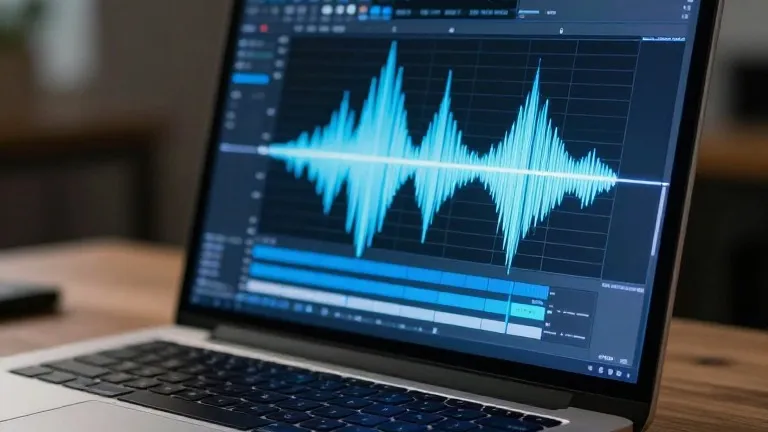
Block has published several audio samples to demonstrate the system's performance. In one clip, the model engages in a conversation that starts with a mistaken identity, referring to the speaker as Ronaldo. Another sample features a discussion about Christopher Nolan films, where the model unexpectedly pivots to Bryan Singer's Superman movies. The team notes that Dessa sounds more natural when paired with OpenAI's GPT-Live-1 voice model, suggesting that audio quality and integration play a role in the final user experience.
From a hardware perspective, the model is designed for local processing. The developers state that Dessa can run on a MacBook Pro M4 Max or any machine with comparable specifications. This local capability allows users to interact with the AI without sending their voice data to a remote server, which aligns with the project's focus on privacy and safety.
The announcement includes a specific plan for initial distribution. Block intends to provide early access to a small group of AI safety researchers before considering a wider release. No specific timeline was provided for a general public launch. The team describes this initial rollout as a step toward making AI systems more responsive to the emotional content of human speech.
Source: The Verge