Palestinian Israelis Weigh Vote Against Right-Wing Shift
With the election set for October 27, residents of Israel's Arab community face a dilemma between blocking Netanyahu and confronting settler expansion.
By Benjamin Bernard ·
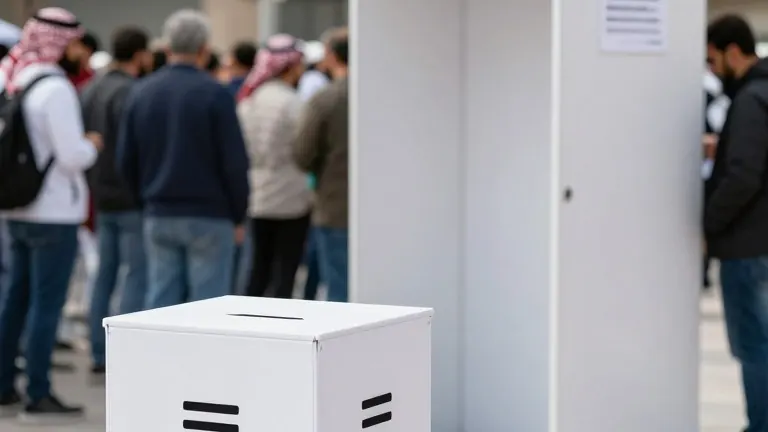
Palestinian citizens of Israel prepare to vote in the national election on October 27. They constitute 20 percent of the total population. The general electorate chooses between Prime Minister Benjamin Netanyahu and opposition leader Gadi Eisenkot.
For the Arab minority, the decision presents a distinct challenge. The political center of gravity has moved to the far right. This shift threatens the political and collective rights of the community. Settlers are encroaching on community boundaries, and violence has increased.
Finance Minister Bezalel Smotrich unveiled a plan in August to add one million Jewish residents to the Naqab and northern Israel. The proposal includes 40 new settlements and hundreds of thousands of new housing units. This strategy aims to extend the territorial control model used in the West Bank into regions with high Palestinian populations.
Security measures are also tightening. National Security Minister Itamar Ben-Gvir has issued 300,000 gun licenses since taking office. He established a National Guard to manage policing in Palestinian towns. This force was created after the May 2021 Dignity Uprising in cities like Lydd and Haifa. The government has also integrated settler security squads into the broader security framework.
Parties representing the community, such as the United Arab List (Ra’am), argue that joining the opposition helps remove the far right from power. Ra’am leader Mansour Abbas stated he will vote to prevent another four years of far-right rule. However, the party’s time in the 2021 coalition government did not result in fundamental policy changes for the community.
Mazen Ghnaim, a Ra’am member, acknowledged in 2022 that the party struggled to push through beneficial policies while in government. The coalition faced internal contradictions that limited its effectiveness. Critics argue that electoral participation alone cannot reverse the structural discrimination and land seizures facing Palestinian citizens.
The community faces a choice between slowing the current political trajectory and confronting the underlying systems of dispossession. The vote serves as a check on the far right, but it does not guarantee a reversal of the social and political shifts occurring in Israeli society.
Source: Al Jazeera