Binnari Village Suffered Devastating Raid as Death Toll Rises
Discrepancies in official figures persist following a coordinated attack on a Taraba State community where armed men targeted residents and local businesses.
By Benjamin Bernard ·
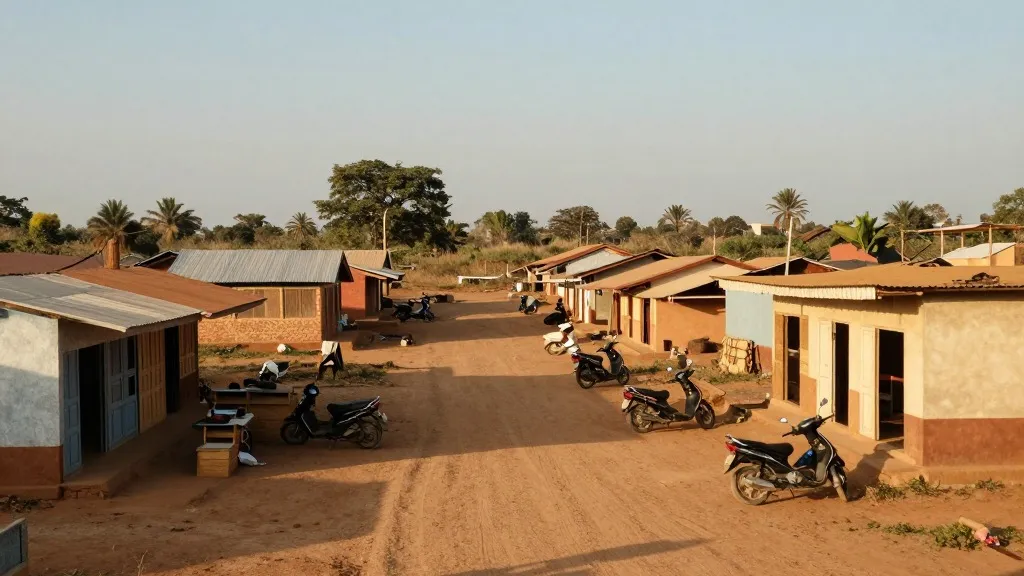
A coordinated assault on the village of Binnari in Taraba State has resulted in a rising death toll, with official counts already climbing past initial estimates. Police authorities reported on Saturday that ten bodies had been recovered by the previous evening, marking the confirmed minimum. However, local witnesses and international observers suggest the true number of fatalities is significantly higher, highlighting the severity of the recent violence in eastern Nigeria.
The timeline of the incident begins on Friday, shortly after the daily prayers. A large contingent of armed men arrived on approximately 50 motorcycles, with two individuals aboard each vehicle. This force overwhelmed the local defenses and proceeded to raid the community. The attackers targeted residential areas and commercial establishments, creating widespread chaos among the population.
During the incursion, the gunmen engaged in systematic looting. They seized cash, foodstuffs, and other essential provisions from local shops. Additionally, residents who fled in panic left behind their personal vehicles, which the attackers collected and removed from the village. The scale of the operation indicates a well-organized effort rather than a spontaneous skirmish, consistent with the tactics used by bandit groups in the region.
Discrepancies emerged immediately regarding the scale of the tragedy. While police initially confirmed ten deaths, survivors provided different accounts to journalists. Sa'idu Nuhu, a resident of Binnari, stated that his neighbors counted more than twenty bodies after the attackers departed. He noted that some individuals remained missing at the time of his report. Another villager, Isiyaku Musa, corroborated this figure, asserting that the toll was no fewer than twenty.
Human rights organizations have also weighed in on the incident. Amnesty International issued a statement on Saturday claiming that forty people were killed in the raid. The group noted that while police confirmed ten deaths initially, further bodies were discovered later in the day on Saturday. This upward revision in the estimated casualties underscores the difficulty in obtaining accurate data from rural areas during active conflicts.
Community leaders described the logistical details of the attack. Malam Abubakar Saifullahi, a local leader, explained that the assailants moved with speed and coordination. Their primary objectives were financial gain and resource extraction. The groups involved in such raids are generally motivated by economic incentives rather than ideological goals, making their actions a persistent challenge for local governance.
This event is part of a broader pattern of instability in Nigeria. Banditry has intensified in the northwest and central regions, where powerful gangs clash with security forces that are often overstretched. Taraba State, located in the central-eastern region, is particularly vulnerable to these non-ideological groups. They frequently raid villages, kidnap individuals for ransom, and impose informal taxes on farmers and miners in areas where state authority is weak.
The Nigerian state has been engaged in a long-standing conflict with armed rebel groups since the Boko Haram uprising began in 2009. The violence in Binnari reflects the continuing struggle to secure rural communities. In a separate development on Saturday, the military reported an air strike in Borno State in the northeast. Officials announced that fifteen combatants were killed in that operation, demonstrating the ongoing multi-front nature of the country's security challenges.
Amnesty International criticized the federal government's response to the crisis. The organization argued that authorities continue to leave rural communities in certain northern regions at the mercy of gunmen. These groups commit atrocities with impunity, according to the statement. The incident in Taraba State serves as a stark reminder of the persistent threats facing civilians in parts of Nigeria with limited security presence.
As the investigation continues, residents of Binnari are assessing the damage to their homes and livelihoods. The loss of food supplies and cash will have immediate economic impacts on the village. The discrepancy between official police figures and survivor accounts remains a focal point for observers. The situation illustrates the complex dynamics of rural security in Nigeria, where local communities often bear the brunt of armed conflicts driven by economic motives.
Source: Al Jazeera