Starshield Speed Limits Disable Ukrainian Drone Defense, Killing Two
Ukraine blames SpaceX’s military satellite network for halting high-speed interceptors, exposing the economic risks of relying on a single launch provider.
By Megan Greco ·
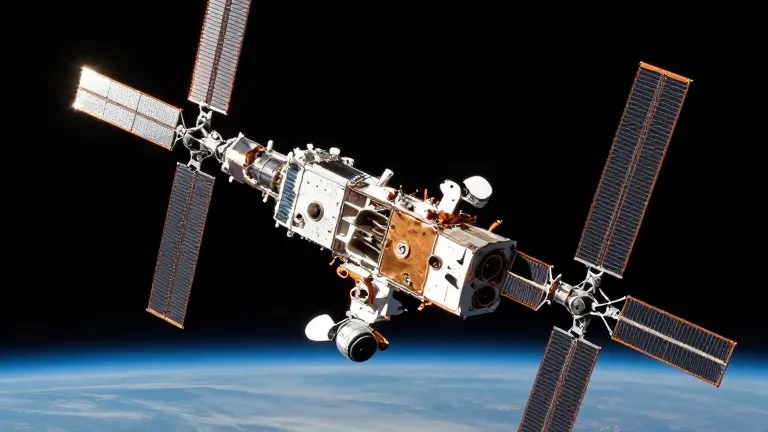
SpaceX’s Starshield satellite network throttled speeds for Ukrainian terminals last week, disabling military drones that move at high velocity. The Ukrainian military reported that two soldiers died and at least 17 were injured after Russian bomb-carrying drones exploited the gap to strike energy infrastructure. The disruption halted Ukrainian interceptors that rely on the Starshield service to track and destroy incoming threats.
The incident followed a period of rising tension between Ukrainian President Volodymyr Zelenskyy and US President Donald Trump. Zelenskyy characterized the slowdown as a direct message from the United States. The Ukrainian military stated it received no advance notice of the technical changes. Access to the service has since been restored in Ukraine.
Accountability for the decision has remained unclear. SpaceX CEO Elon Musk initially stated that the US military controlled Starshield decisions, while the White House denied acting directly. Subsequent reports indicated that Musk proposed the slowdown to Trump, who approved it, before later accounts suggested Musk ordered the restrictions independently. This shifting narrative has intensified scrutiny on the private company’s role in state defense.
Ukraine’s dependence on US space technology is a core economic vulnerability. In 2022, coverage for a counterattack in Crimea was also limited. Experts indicate that the current situation highlights the market concentration in the space sector. Wendy Whitman Cobb of the School of Advanced Air and Space Studies at Maxwell Air Force Base noted that SpaceX holds an effective monopoly on launch. Rivals such as United Launch Alliance, Blue Origin, and Rocket Lab exist, but they do not match SpaceX in frequency, mass, scale, or cost.
Space economist Oğuz Karasu of the Oxford Space Initiative described the monopoly as practical rather than legal. He noted that launch represents about 8 percent of the space industry, but the remaining sector cannot function without it. Andrew Reddie of the University of California, Berkeley, compared the situation to an antitrust issue. SpaceX launches support its own Starlink constellation, leaving little incentive to launch competing networks, although it has launched some Amazon Kuiper satellites.
Cost structures are shifting as well. Whitman Cobb and Karasu reported that Falcon 9 prices for low Earth orbit are rising. Starlink prices have also climbed since its 2020 beta launch. SpaceX has built a network of more than 10,000 Starlink satellites in low Earth orbit using Falcon 9 rockets. The concentration affects daily systems such as GPS, which supports fuel pumps, ATMs, and financial transactions.
Future exposure is growing as SpaceX reportedly plans to retire the Falcon 9 rocket by 2028 and take no new missions. The Space Force is currently searching for alternative launch options for military satellites. NASA faces uncertainty regarding future access to the Crew Dragon capsule. Michele Scataglini of the Oxford Space Initiative stated that the market needs more competition. Reddie emphasized that a non-state actor is making decisions with the impact of a government, affecting Ukraine’s defensive capability.
Source: The Verge
More Business · Tech news · Bad Business · Report a business · Got a Story?