Sanchez leads final push against right-wing bloc in Sunday's Spanish election
Spanish Prime Minister Pedro Sanchez holds a final rally in Madrid as polls show him trailing the Popular Party ahead of a vote that could reshape European politics.
By Chloe Zhao ·
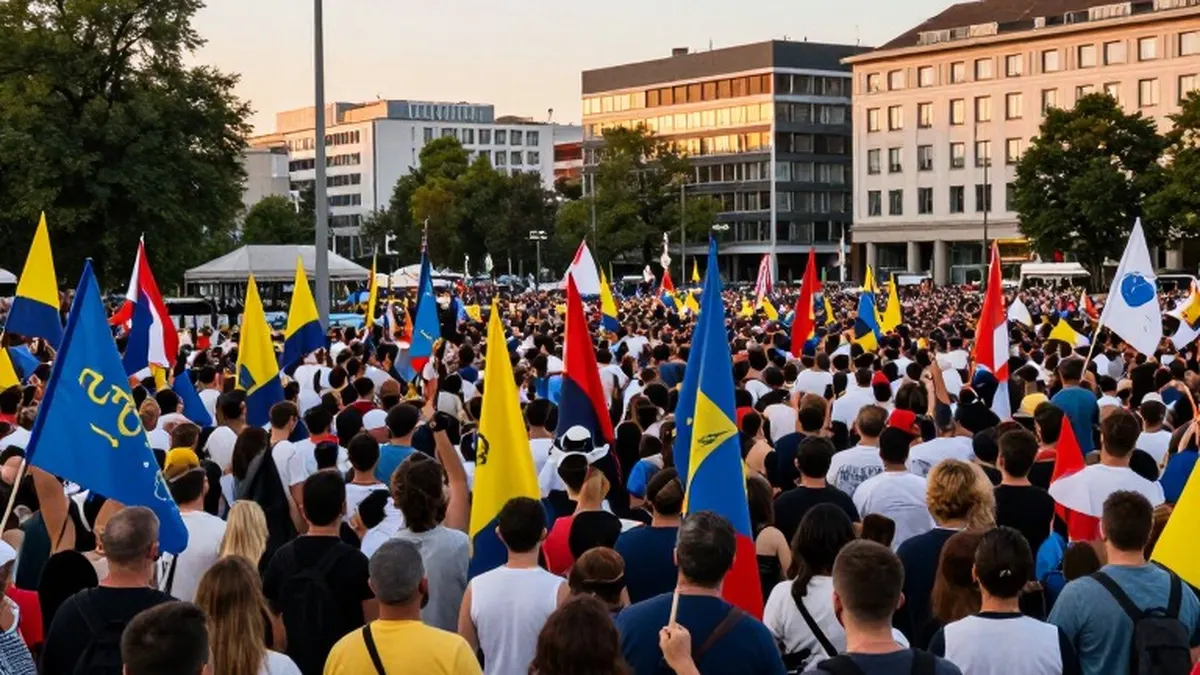
Spanish Prime Minister Pedro Sanchez staged a final campaign rally in Madrid on Friday, the last day of campaigning before Sunday's high-stakes national election. The premier is attempting to overcome significant polling disadvantages as he seeks to defeat a potential coalition of right-wing and far-right parties. This election is viewed as a critical moment for Spain and sets the tone for an electoral cycle across Europe that could alter the balance of power within the European Union over the next year.
Opinion polls consistently place Sanchez and his Socialist Party behind the main right-wing opposition, the Popular Party, often referred to as the PP. The PP is predicted to secure the most seats, though the result is likely to produce a hung parliament. Consequently, the PP may need to rely on the far-right, anti-immigration Vox party, which is Spain's third-largest political force. Vox is expected to double its number of seats and currently governs several regions in partnership with the PP.
The prospect of a PP-Vox coalition represents a historic shift, as it would be the first such alliance since Spain's transition to democracy following the dictatorship of General Francisco Franco from 1939 to 1975. Sanchez has framed his final appeal as a battle against the "regression" that such a conservative alliance would bring. He aims to mobilize left-wing voters who have traditionally stayed home during final campaign periods.
Paloma Roman, a politics expert at Complutense University in Madrid, noted that the final hours of the campaign are decisive for Sanchez. She explained that stay-at-home voters tend to favor the left, and motivating this group is crucial. While some recent polls suggest the gap between the Socialists and the PP is narrowing, raising the possibility of a comeback, it remains uncertain if the left can surge enough to overtake the right-wing bloc, which has campaigned on the slogan of "kicking out Sanchez."
Roman predicted that voter turnout on Sunday would be very high, potentially reaching 78 percent. In their own final campaign stops, PP leader Alberto Nunez Feijoo is scheduled to hold a rally in Seville, the capital of the southern Andalusia region. Meanwhile, Vox leader Santiago Abascal will conclude his campaign in the eastern city of Valencia.
Sanchez has built a strong international profile in recent years, positioning himself as a prominent leftist leader on the global stage. His record includes an outspoken defense of immigration, frequent clashes with US President Donald Trump, and sharp criticism of Israel. Domestically, his eight-year tenure is under pressure due to his polarizing status among voters.
The housing crisis has become a central issue in the election. Sanchez recently passed measures to support tenants, leveraging public anger over the lack of affordable housing. The right-wing parties, whose rejection of urgent housing decrees in October led Sanchez to call for an early vote, have blamed his successive governments for the soaring costs of property and rent.
Living costs remain a top concern for Spanish voters, overshadowing positive macroeconomic data in the European Union's fourth-largest economy. Provisional data released on Friday indicated that inflation hit 4.1 percent in November. This economic pressure adds urgency to the debate as voters prepare to head to the polls.
Feijoo, who governed the northwestern region of Galicia for 13 years, is projecting an image of administrative competence. He has regularly attacked Sanchez over several high-profile corruption scandals involving the Socialist leadership. In contrast, Vox has focused its campaign heavily on immigration, a topic that dominated political discourse after tens of thousands of migrants arrived in Spain's north African city of Ceuta in July.