Rivian Buy: 15-Person UK Team Joins to Process 400,000 Daily Fleet Clips
The acquisition adds generative AI capabilities to Rivian's autonomy group to convert customer driving footage into 3D test environments.
By Benjamin Bernard ·
Rivian has acquired Third Dimension, a 15-person startup based in the United Kingdom, to integrate its generative AI tools into Rivian's self-driving development pipeline. The move allows the automaker to convert raw video data from its customer fleet into three-dimensional environments for testing and validation. TechCrunch first reported the transaction. Rivian did not disclose the purchase price.
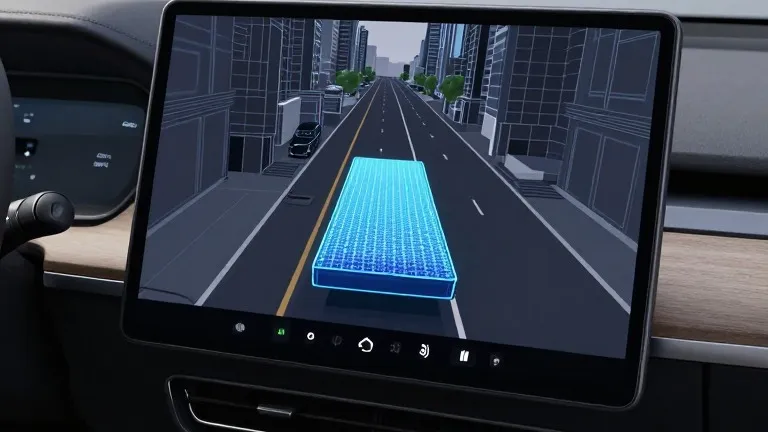
The acquisition directly addresses the volume of data currently flowing from Rivian vehicles. Owners of the R1S, R1T, R2, and commercial vans who opt into camera data sharing generate a massive stream of footage. James Philbin, who leads Rivian's autonomy and AI group, stated that this fleet sends back more than 400,000 driving sequences every day. Most of this material captures routine driving conditions. Engineers specifically seek rare, high-stress scenarios, such as a mattress in the fast lane or a police officer waving traffic through a red light.
Rather than waiting months for these specific events to occur naturally on public roads, the new team will use AI to recreate them in 3D. This process allows engineers to alter variables and test system responses in a controlled digital space. Philbin told TechCrunch that simulation is central to how the company trains and validates its autonomous driving systems. He described Third Dimension as having built impressive technology that turns real-world data into detailed 3D environments.
Third Dimension was founded in 2024 by Tolga Kart and Piotr Sokólski. Kart previously spent more than two years at Tesla working on Autopilot simulation. Before that, he served as a senior director on Call of Duty at Activision and later led engineering at Parallel Domain. Sokólski spent four years at Wayve, where he built photorealistic neural simulators for self-driving cars. The company raised a $7 million seed round in October 2024, led by Felicis. At the time, it listed game studios, film production, the US military, and autonomous vehicle companies as potential customers.
The entire staff of Third Dimension is joining Rivian's autonomy and AI group. Because the majority of the team is based in the United Kingdom, the deal expands Rivian's operational presence in London. The company positions the acquisition as a targeted addition of specialized engineering talent rather than a large-scale structural change.
Other major players in the autonomous vehicle space have pursued similar strategies. Waymo unveiled its Waymo World Model in February, a system built on Google DeepMind's Genie 3 technology to generate scenarios its vehicles have not yet encountered. Tesla has also demonstrated a neural world simulator designed for its Full Self-Driving software. These efforts reflect an industry-wide shift toward using generative AI to test edge cases that are difficult to capture in real-world driving.
The acquisition occurs against a backdrop of tightened timelines for Rivian's autonomy goals. In March, Uber agreed to invest up to $1.25 billion in Rivian to deploy R2 robotaxis. Only $300 million of that investment is paid up front. The remaining funds are contingent on meeting specific autonomy milestones. These include placing 10,000 driverless R2 vehicles on Uber's network in San Francisco and Miami starting in 2028.
Rivian's consumer-facing features are also on a shifting schedule. The point-to-point driving feature is set to reach a small group of invited Autonomy+ owners later this year. Participants in this early program must sign a nondisclosure agreement. The company originally targeted 2026 for eyes-off driving capability, a promise made by CEO RJ Scaringe in January 2025. That target has moved to 2027. Level 4 capability is planned for 2028 on the Gen 3 hardware unveiled at the company's AI & Autonomy Day.
The integration of Third Dimension's tools provides Rivian with a method to process its daily data volume more efficiently. The team will focus on generating high-fidelity test tracks from existing fleet footage. This approach allows for rapid iteration on system behavior in complex, rare scenarios without requiring physical vehicle deployment for every test case.
Source: Electrek
More Business · Tech news · Bad Business · Report a business · Got a Story?