One hour apart: the gap between survival and death in Lebanon strike
A 21-year-old photojournalist escaped rubble while her 42-year-old colleague died nearby, an incident human rights groups have labeled a war crime during a ceasefire.
By Chloe Zhao ·
One hour separated survival from death for two journalists documenting the aftermath of a month-long Israeli air campaign in southern Lebanon. Zeinab Faraj, 21, woke trapped under rubble after a missile struck her vehicle, while Amal Khalil, 42, died approximately one hour before paramedics returned to the site.
The incident occurred on 22 April, shortly after Israel agreed to a ceasefire that ended a series of airstrikes concentrated in the south. Faraj, a freelance photojournalist finishing a radio and TV degree, traveled with Khalil, a newspaper reporter, to the village of al-Tiri. They were accompanied by Ali Nabil Bazzi, a municipal official, and Mohammed Hourani, a local resident. Faraj stated she had no sense of fear, viewing the audible gunfire and artillery as standard conditions for videographers.
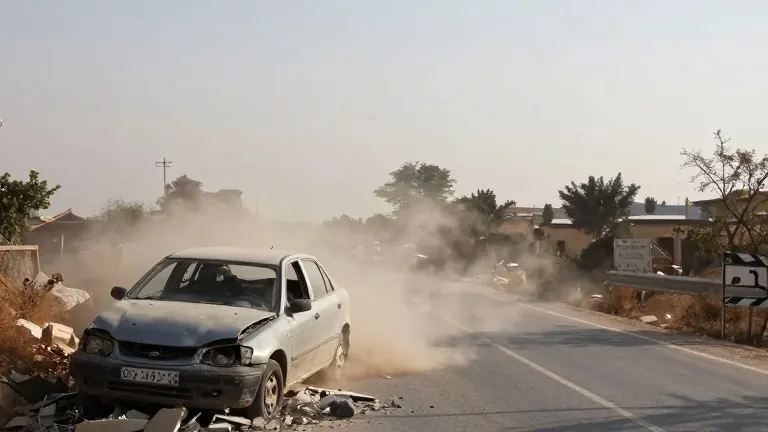
A missile impact threw the women from their car. Khalil, sustaining injuries to her face, hand, and leg, collapsed in a nearby house. Faraj described the arrival of low-flying drones that hovered close to her face. Emergency services promised rescue, a reassurance Faraj said functioned "like an anaesthetic." A second missile struck the car as the women attempted to re-enter it, forcing them to take shelter again.
Faraj sent a final message to her sister before her phone battery died: "There's no hope left. Forgive me." A paramedic reached the location and held Faraj by the shoulders while a second worker cleared the debris. They extracted her while drones circled and a stun grenade was dropped nearby. Khalil was believed to have died about an hour before this rescue operation began.
The Israeli military stated it identified saboteurs violating the ceasefire. Human rights groups countered that the attack constituted a war crime, noting the military received repeated messages requesting permission for a rescue while the women sheltered. Tensions had risen in the week prior, as an Israeli military spokesperson had labeled a video of Khalil "terrorist media," and she had received death threats from Israeli phone numbers.
Faraj now prepares to return to university with lasting physical damage, including an injured hand and restricted facial movement. She reports waking at night screaming and feeling anxious around aircraft. The attack killed Bazzi and Hourani as well. Faraj remains haunted by the image of Hourani on the ground, his eyes open, looking at her.
The strike occurred in a region where whole villages were flattened during the initial month of strikes. The ceasefire allowed residents to return, but the incident in al-Tiri has raised questions about the safety of civilian and journalistic presence in the zone. Faraj’s injury to her eyebrow and hand marks the physical cost of the reporting, while Khalil’s death marks the human cost.
Source: The Guardian