Ohio volunteers push ballot measures to stop new data centers
A bipartisan group is using local charters and a state petition to challenge developers who have secured land in rural areas through quiet sales.
By Chloe Zhao ·
Residents in ten Ohio communities will soon decide whether to ban large-scale data centers on their property. The measures would amend local charters to prohibit the construction of facilities used to power artificial intelligence. This effort goes beyond the temporary pauses adopted by hundreds of other municipal and county governments across the state.
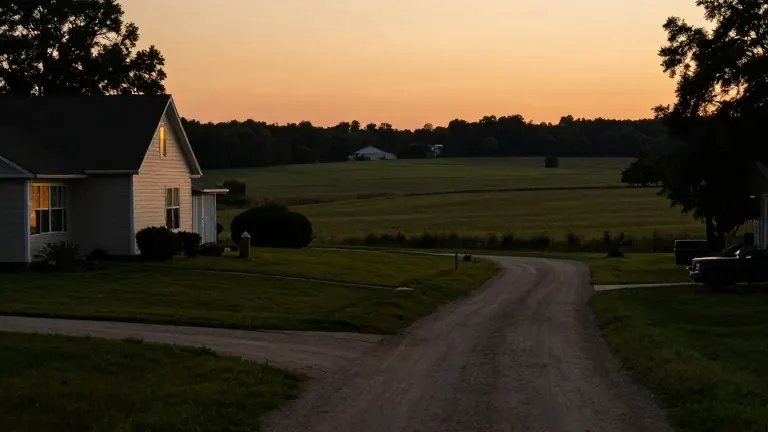
The movement was organized by Conserve Ohio, a network of volunteers active in nearly all 88 counties. The group includes Democrats, Republicans, and Independents who formed after discovering that data center developers purchased 1,000 acres of farmland in Mt. Orab, a suburb of Cincinnati, between 2024 and 2025. Nick Owens, a lifelong Republican and local attorney, led the initial investigation after property records revealed the sales.
Owens said the land in question borders residential neighborhoods that he described as having small-town charm. He noted that nondisclosure agreements have prevented residents from learning specific details about the projects. He and other local officials, including a real estate agent, mobilized the volunteer network to ensure voters have a direct say in the matter.
The group is also working on a petition to add a statewide ban to the state constitution. Their goal is to place that amendment before Ohio voters in 2027. Conserve Ohio members argue that while data centers bring tax revenue and construction jobs, the noise and emissions associated with hyperscale facilities are often unwelcome in rural areas.
Owens suggested that developers should consider building on old industrial sites, or brownfields, to create a buffer between the facilities and residents. He acknowledged that building on pristine farmland is often cheaper for developers but argued that those sites should be the priority. He stated that the community is not for sale, even if local governments receive extra funds.
The issue has become a central topic in the upcoming midterm elections. Former Democratic Senator Sherrod Brown has labeled incumbent Republican Senator Jon Husted as the face of data centers, citing Husted's past support for the industry as lieutenant governor. Husted has countered by pointing to Brown's historical support for such projects and introduced a bill in Congress to make data centers pay for power grid upgrades. Senate Democrats have blocked that bill, describing it as toothless.
Linda Moodie, an independent volunteer in Fairfield, is collecting signatures for the statewide ban at local events. She expressed distrust that statewide candidates will voluntarily give people a say in the buildout. On a recent evening, she handed out candy and petition clipboards at a Halloween celebration in the Cincinnati suburb.
In Mt. Orab, a county that voted 80 percent for President Trump in 2024, campaign signs are noticeably scarce. Owens said the data center issue and high diesel prices have dampened Republican enthusiasm. He called President Trump's recent social media posts, which called for data centers to "Let Data Reign," tone deaf. Construction at the Mt. Orab site has not yet begun, and residents remain in the dark due to ongoing nondisclosure agreements.
Source: WUSF Public Media