Bereaved Families Push Cohesion Agenda
Relatives of fallen soldiers urge the incoming cabinet to establish a national framework for social unity within the first 100 days.
By Chloe Zhao ·
Israelis have long prioritized the protection of wildflowers, a campaign dating to the 1960s that combined legal safeguards with public education. Now, a group of bereaved families is asking the country to apply the same rigor to the preservation of social cohesion.
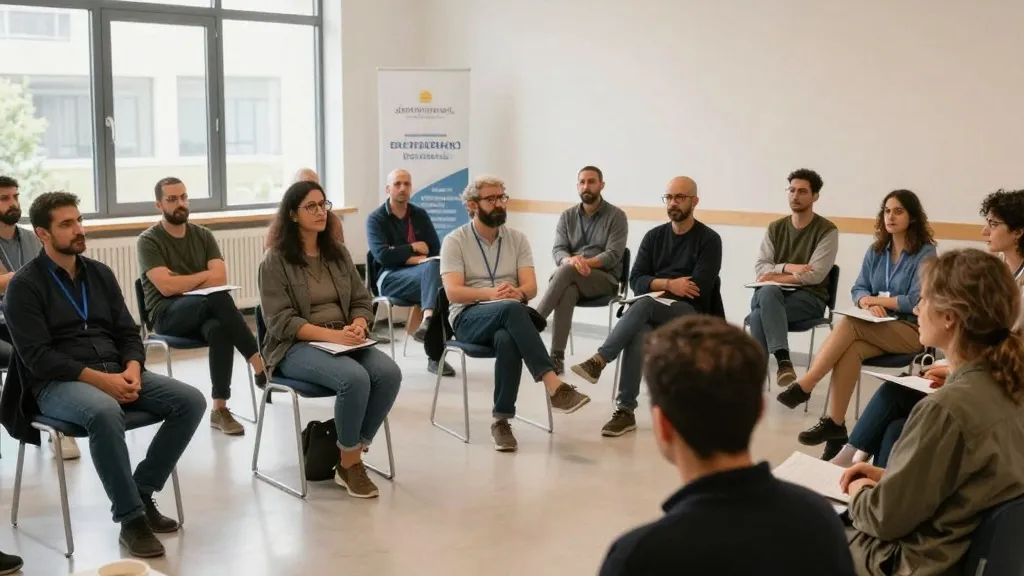
The initiative, known as Hamechane, is led by relatives of soldiers killed in the October 7, 2023, attacks and subsequent operations. They are calling on the next government to create a national framework for social unity within its first 100 days in office. The group includes bereaved relatives, captivity survivors, and individuals wounded during the Israel-Gaza War.
Moshe Shapiro, whose son Aner was killed while defending festival-goers, views this effort as a national responsibility. He cites the wildflower campaign as a model for how legal protection and education can instill long-term values in generations of children. The goal is to make respect for others a deeply ingrained habit, even when deep disagreements persist.
Shai Zohar, uncle of Capt. Omer Neutra, a New York native whose body was returned from Gaza in November 2025, argues that internal polarization is Israel's greatest existential threat. He contends that divisions existing before October 7 contributed to the catastrophe. Zohar described unity as an operating system and warned that the nation has already paid an immense price for its fractures.
Hoda Daxa, whose husband Col. Ehsan Daxa was killed in northern Gaza in October 2024, highlighted the daily challenges of belonging. She recalled sensing discomfort on a train while speaking Arabic to her children. Daxa emphasized that unity must extend beyond Jewish solidarity and that many citizens already feel a strong connection to Israeli society. She noted that group members support different political parties but engage in conversation with open hearts rather than assumptions.
The group’s members represent a broad cross-section of Israeli society, including religious and secular Jews, Haredim, Druze, and individuals from the political Right and Left. Shapiro described a yearlong process of building a shared vision where no one had to hide their views. He drew a parallel to the Six Day War era, when Prime Minister Levi Eshkol expanded the government to include opposition parties, a move urged by Shapiro's grandfather, a signatory of the Declaration of Independence.
The initiative also addresses the impact of the 2018 Nation-State Law on various communities. Druze critics argue the law excludes their community, despite their soldiers' service in the state. The High Court upheld the law in 2021, and while the coalition promised separate legislation on Druze status, spiritual leaders have called for constitutional recognition of the community's rights.
Hamechane has not yet defined the specific structure of the proposed body, leaving that decision to elected officials and professionals. The group aims to foster personal connections through schools, workplaces, and communities. Shapiro stressed that the initiative does not ask citizens to sacrifice their lives, but rather to listen, make room for others, and recognize that disagreement does not cancel mutual obligations. Daxa added that simply recognizing polarization as a national danger would be a significant first step.
Source: The Jerusalem Post
More Politics · World news · Report a business · Got a Story?