Democrats favored to take House as midterms near
Polls show only 15% of Americans say their finances improved since 2024, while historical data suggests the president's party faces steep losses when approval ratings dip below 50%.
By Chloe Zhao ·
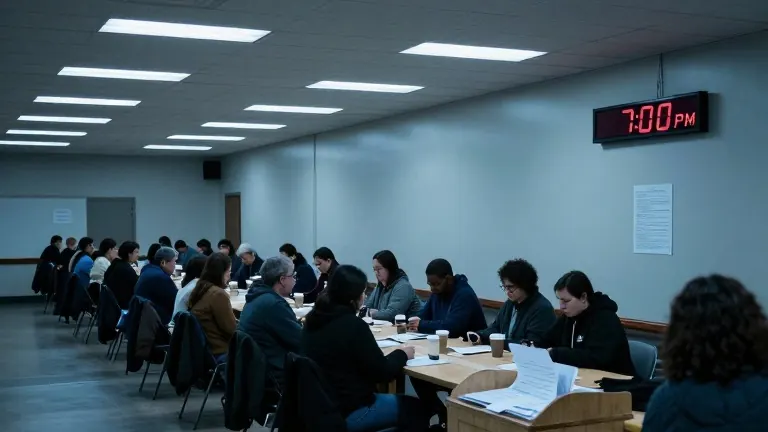
Voters in the United States are heading to the polls on November 3 with a clear financial mandate: 44% of respondents in a recent NPR, PBS News, and Marist poll said their personal finances have stayed mostly the same, while 38% reported a decline. Only 15% stated that their economic situation has improved since President Trump took office in 2024. This sentiment contrasts with the campaign promise to lower prices, a goal that has not been met as inflation continues to outpace wage growth.
Three factors shape the current political moment. First, the administration's economic decisions, including tariffs and the conflict with Iran, have directly raised the cost of goods and energy. Second, the labor market remains middling, and rising interest rates are making home and car purchases more difficult for millions of Americans. Third, the wealthy have seen stock portfolios grow, largely driven by AI companies, while regular Americans struggle with the cost of living and opposition to new data centers.
History suggests the Republican Party will face a difficult November. Since World War II, the president's party has gained House seats in midterms only twice. When a president's approval rating falls below 50%, as it has for Trump, that party has lost an average of 35 seats. In years when approval ratings stay above 50%, the average loss is 15 seats. Democrats have capitalized on this trend, overperforming in special elections and winning the 2025 off-year contests.
Structural changes complicate the picture for both parties. The Cook Political Report identifies roughly 30 fewer competitive districts this year compared to 2018, when Democrats won more than 40 net seats. Mid-decade redistricting has provided Republicans with an estimated eight-seat advantage, a gain that could be influenced by voting patterns among Latinos in South Texas. Despite these headwinds, Democrats are favored to control the House and are close to winning the Senate, a position that seemed unlikely at the start of the cycle.
The outcome will hinge on turnout and the dynamics of the 2028 presidential race. Trump has traveled to red states to urge his base to vote, knowing that low Republican turnout could turn a small Democratic Senate gain into a six or seven-seat victory. Simultaneously, self-identified democratic socialists show high engagement, with 44% of poll respondents saying their vote is a check on Trump. As candidates for the 2028 election begin to announce their bids as early as January, the midterm results will set the stage for the next open presidential contest.
Post-election clarity may be delayed. While many districts will be called on election night, close Senate races could take days or weeks to resolve. A quarter of Republicans in the latest poll said their candidate likely should not accept the results if the race is close, raising the prospect of disputes. Most voters across party lines, however, believe their states will run fair elections and that the winning candidate should accept the outcome.
Source: WPGH? WPXI? WESA