Iran War Developments: Trump Signals Flexibility as Naval Tensions Escalate
President Trump claims the U.S. holds the initiative in the conflict while Iranian authorities report new mine strikes and deny responsibility for a deadly drone attack in Kuwait.
By Chloe Zhao ·
President Donald Trump stated on Thursday that the United States is poised for victory in the ongoing conflict with Iran and that the end of the war will occur whenever he decides. Speaking from his Mar-a-Lago resort in Florida, the president described the current situation as a period where he is offering the Islamic Republic an opportunity to act wisely. Although he expressed hope that Tehran would take advantage of this window to make a deal and save lives, he admitted he doubts the Iranian regime will seize the chance.
The president further characterized the conflict by downplaying the strategic impact of intelligence sharing from Russia and China. He noted that he had discussed the war with both Chinese President Xi Jinping and Russian President Vladimir Putin. Trump argued that while both nations share information, their involvement is limited compared to direct military engagement. He suggested that the two countries ultimately want the conflict to end and are, in his view, assisting U.S. efforts in that regard.
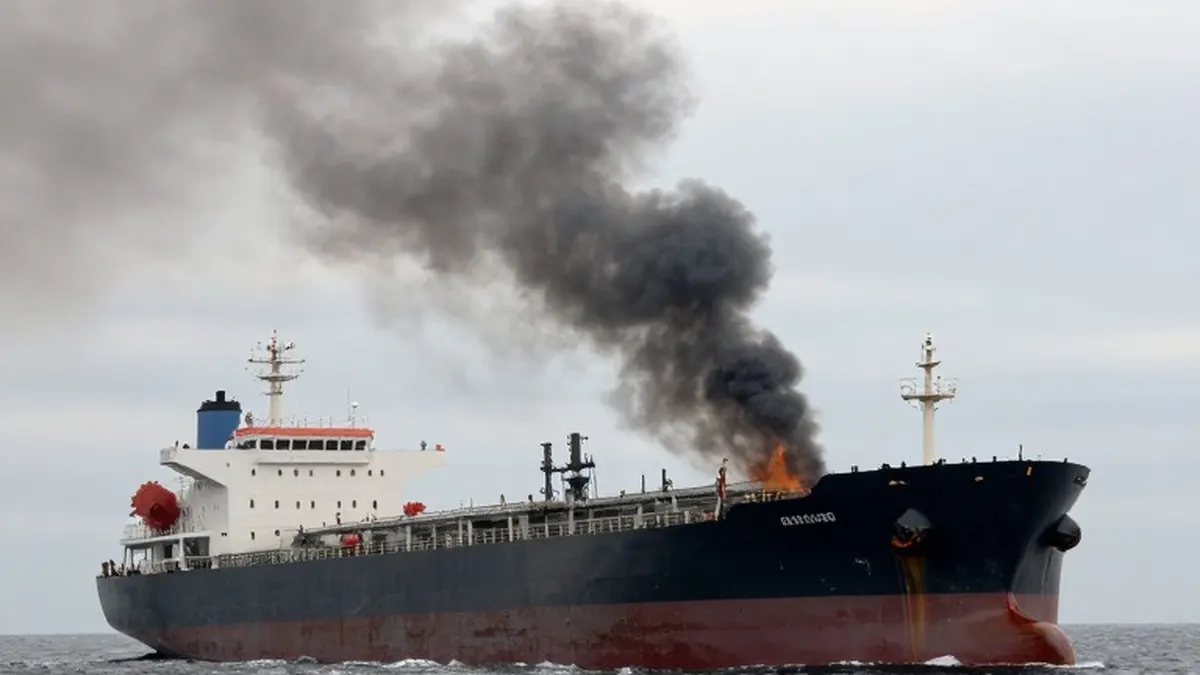
Tensions in the Strait of Hormuz have intensified, with Iran’s Revolutionary Guard claiming that another oil tanker struck a sea mine on Friday. The IRGC Navy stated that the unidentified vessel was on fire after hitting the mine while attempting to traverse the waterway via an unauthorized route. The group defined this term to refer to the southern shipping lanes, which the U.S. military maintains are safe, but which Tehran has advised ships to avoid. The IRGC noted that a second tanker accompanying the stricken vessel was forced to turn back.
Independent maritime data supports the narrative of reduced traffic in the region. Kpler, a maritime intelligence firm, reported that ship transits through the strait have dropped significantly this month. By November 23, weekly journeys had fallen to 147, a sharp decline from the 217 recorded at the start of November. The IRGC claimed this drop demonstrates Iran's absolute sovereignty over the waterway, though independent agencies have not yet fully confirmed the latest mine strike.
In a related development, Iranian Navy Commander Rear Adm. Shahram Irani claimed that Iranian commandos had reclaimed two oil tankers previously seized by U.S. forces. According to state media reports, the commandos boarded the vessels while American personnel on board were asleep. The U.S. military’s Central Command has not immediately confirmed the incident, though it has rejected similar IRGC claims in the past. The U.S. had not announced the seizure of any Iran-linked commercial vessel in the region since April.
The conflict also sparked a dispute over a drone attack on a Kuwaiti military facility that killed two Italian nationals on Thursday. The Iranian Embassy in Rome categorically rejected allegations that Iran was behind the strike. Ambassador Ali Akbar Rezaei expressed condolences to the victims' families in a separate statement, while the head of the European Commission called for increased international pressure on Iran regarding the incident.
Meanwhile, President Trump expressed support for Iraqi Prime Minister Ali al-Zaidi’s efforts to consolidate state authority. The U.S. president highlighted the importance of stopping oil smuggling and bringing all weapons under central government control. Al-Zaidi has been working to place two Kurdish-administered border crossings and several oil fields under federal jurisdiction to combat smuggling. Kurdish regional authorities have criticized these moves as a constitutional violation.
Iraqi authorities estimate that the country has lost approximately $100 billion to oil smuggling through the northern Kurdistan region, which borders Iran. Intelligence documents suggest that crude oil from Kirkuk and Sulaymaniyah is being smuggled into Iran, blended with local crude, and then exported to Afghanistan. The U.S. has accused Iran of using the Iraqi economy to evade sanctions, with assistance from powerful militia groups.
Trump’s comments reflect a broader strategy of applying pressure while leaving room for diplomatic resolution. He previously referred to Iranian negotiators as professional tap dancers and suggested they have until the new year to agree to a peace deal. As the war continues, both sides are balancing military actions with diplomatic messaging to shape the outcome of the conflict.
More News · National news · Report a business · Got a Story?